

Having not attended last year, it was really good to see just how much has changed in the 2 year period, what is likely to change in the coming 12 months, and what level of interest there is from the market, with delegate numbers up on previous years, and a great platform of speakers from all parts of the supply chain, both domestic and international. We certainly do live in interesting times, and this event was an ideal insight for all delegates I am sure!
RDF exports grow

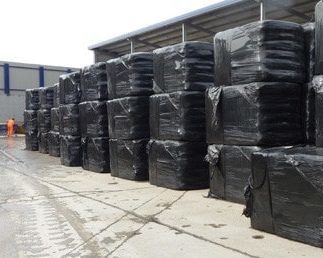
The trend of RDF exports increasing year on year was confirmed for 2017, with Pandora Rene from the EA noting that 2.7Mtpa of RDF had been exported from the UK year to date, slightly up on previous years (the plateau effect being attributed by Harriett Park of the RDF Industry Group to a maturing of the market), whilst more significantly the export of SRF (the higher quality fuels) had grown from 1 Mtpa in 2016 to 1.8Mtpa to date in 2017. However, the rapid expansion of RDF exports in previous years should not be forgotten, with exports in 2010 being negligible whilst they had grown by 2016 to almost 4 Mtpa (from the UK and RoI). Of this, 1.7Mtpa went to the Netherlands, whilst Germany took 1 Mtpa, with other significant loads going to Sweden, Denmark & Norway.
Quality & Heat are key
The big focus for the sector right now, at least based on the coffee discussions between sessions, is on quality, and with increasing UK capacity for reprocessing of SRF, the EA have no plans to stop legitimate exports of RDF (or SRF) believing that the market will find its own equilibrium, but they are concerned about ensuring quality product leaves the UK, so we don’t have the same problem that recyclers are facing with paper and plastic exports to china. Interestingly the EA did express a preference that SRF use in the UK to produce heat would be the preferred use, and the general feeling in the room was that this made sense, and linked nicely to messages in the BEIS Clean Industrial Strategy and the Government’s Industrial Strategy about heat production and on-shore processing.
Some of the afternoon debates focused on the age old issue of the environmental benefits and comparative performance of RDF exports. Evidence from a number of the speakers really brought home the significant environmental benefits of exporting both RDF and RDF if it goes to CHP facilities in the Netherlands, Germany & Denmark etc. when compared to UK landfill or UK energy recovery. The carbon benefits associated with the 70% (or better) thermal efficiency rating of many European plants because of their ability to distribute heat to end users, far outweighs the transport impacts of moving large containers of RDF to Europe. In some cases our exports travel shorter distances by ship to the continent than some residual wastes travel to be landfilled in the UK (by rail, rover or road), and our European partners in attendance were keen to stress that they still want our material (at least for the short term (5 years or so). So things are still looking bright …..
Export market maturation?
The maturing of the export market was most evident from the details presented in session 2, the one I chaired. Here a number of data experts presented their own take on RDF / SRF export data sets, and I (and the large audience) was absolutely fascinated by the insights that are available if you look at the data with a new lense or two. Andrew Gadd of Footprint Services showcased that UK RDF export accounts for 62% of all EC RDF exports, feeding spare EfW capacity on the continent, but the real question was how much feedstock does the EC need in the future, which will be determined by the EC Circular Economy Package and just how high we push on recycling, and will that mean potentially there is less market demand for UK RDF, even if our production continues to grow?
What I hadn’t realised was that the ‘big 5’ (Biffa, Suez, FCC, Shanks and Veolia) waste company RDF exporters are increasing RDF exports still whilst ‘others’ are decreasing there’s, which on reflection is down to them having a larger portfolio of end markets / off takers. Exports from the big 5 to the Netherlands continues to increase (by almost 100,000 tonnes in the last 12 month period) bucking the overall trend for that destination. See the devil really is in the detail!
And the general theme of market maturation was borne out by the reducing number of consignees since March 2016 to RDF / SRF export, peaking at 77 companies, down to only 45 by September 2017 (a 42% reduction).
The only certainty is uncertainty
And there is a great deal of uncertainty on the horizon…what with the EC Circular Economy package potentially helping to divert materials away from RDF, the ongoing concerns around the potential repatriation of exported mixed MSW from China, the reduced value of the pound (£) by almost 20% against the Euro which is adding as much as £5 to each tonne exported and the often muted need for an incineration tax all threatening to impact feedstocks, and quantities and composition of SRF and RDF outputs. And this is why an annual event like this one is so important to those of us working in and around RDF, SRF, and export markets in general.
Looking ahead?
So where is the future for RDF and SRF export? If I was a betting man (which I’m not) I would suggest there will be little change in aggregate RDF / SRF tonnage exports in 2018, and only in 2019 will we start to see a possible shift in materials being available to export as more UK facilities come on line (that might want some of the SRF / RDF) and as we see the impacts of BREXIT discussions on commodity trading (although we expect this to be minimal in effect). But the devaluation of the pound could be more significant in making our feedstocks less attractive to these plants going forward, and with increasing UK outlets the price ‘tipping point’ may not be too far away.
However, I would expect the UK to still be exporting at least 2 M tpa of RDF / SRF in 2020 and beyond (possibly for another 10 years or so as our infrastructure takes time to come on line), but the mix of this export may change as market forces start to ‘hit’ (so bank on more SRF compared to RDF I suggest).
Given the recent Government Industrial Strategy launch, BEIS’s commitments to ‘clean industrial growth, and the impending DEFRA Waste & Resources Strategy, the situation could change quite a bit in the next 12 months. Greater policy clarity on the UK’s resource productivity, the economy’s resource effectiveness, and zero waste to landfill could provide the spark for new investment in UK based energy centres (and in particular England) that are fed (at least in part) by SRF. So maybe the themes we focus on at future events won’t be so dominated by export markets, prices and trends?

So when I join this event next year (and I will be back next time as the degree of uncertainty is making a closer watching brief more important than at any time in the last 5 years) the debates might be very different, focusing on new UK infrastructure investment opportunities, new heat offtake markets, and a reduced reliance on exports… as I said we live in interesting times, and to stay on top of the issues you need to be at events like this to gauge the market trends and have those coffee cup conversations that offer clarity on many fronts.
Thank you to letsrecycle.com for the invite to chair, as always I learnt a lot, and I have shared just a little of that with you in this article.
As with all my ‘comments’ they are mine and mine alone. If you would like to get in touch or share your opinions then email me adam.read@suez.com.

Register for free to comment