

The two-year contract, which could be extended until 2020, is worth up to £8 million and will see the successful bidder handle kerbside refuse as well as bulky residual waste.
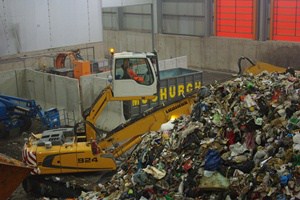
At present, the local authority sends around 30,000 tonnes of waste per year to New Earth’s mechanical biological treatment (MBT) in Avonmouth – a contract which is due to expire in 2016/17.
Some 9,000 tonnes of this residual waste remains outside of the scope of the new contract, as it is committed to the facility as part of the West of England Partnership’s residual waste contract with New Earth, and is not due to expire until 2020 (see letsrecycle.com story).
The unitary council currently operates a weekly kerbside refuse collection service to around 78,000 households, with the majority collected in either black sacks or traditional dustbins.
It also provides a weekly kerbside sort recycling service, weekly food waste collections and an optional fortnightly garden waste service on subscription.
Review
A service review is currently underway to examine a number of improvements to the collection services in a bid to increase recycling. Any changes would be implemented in 2017 and could impact the ‘volume and composition’ of waste collected, the council warns.
The council is seeking either a ‘mechanical, biological or thermal technology’ treatment process from the tender – meaning it may look to other technologies besides MBT.
Refuse sent to New Earth’s MBT is converted into refuse-derived fuel (RDF) and sent on to the company’s former gasification plant – now operated by Avonmouth Bio Power. A fire broke out at the facility in December 2015 which temporarily disrupted RDF supply.
Uncertainty now surrounds the future of the New Earth MBT and its remaining waste contracts after the business admitted it was negotiating the sale of its overall debt to a European CHP-developer (see letsrecycle.com story).
Partnership
As a part of the West of England Partnership, Bath & North East Somerset is a signatory to a joint waste strategy also signed by South Gloucestershire, Bristol and North Somerset councils.
The strategy allocated two potential residual waste facility sites in the region, including the former Fuller’s Earth Works in Bath and Broadmead Lane in Keynsham.
However, the Partnership has become “divorced” from the waste arrangements of the individual councils in 2011 following Bristol council’s decision not to pursue the second phase of the strategy, according to West of England’s John Malyckj.
Bath & North East Somerset are inviting tenders for the residual waste treatment service until 4 July 2016.

Register for free to comment