

Instead the council is to purchase £200,000 worth of sorting equipment and take on 10 extra staff at an annual cost of £280,912. The authority will handle the sale of recyclable materials in-house.
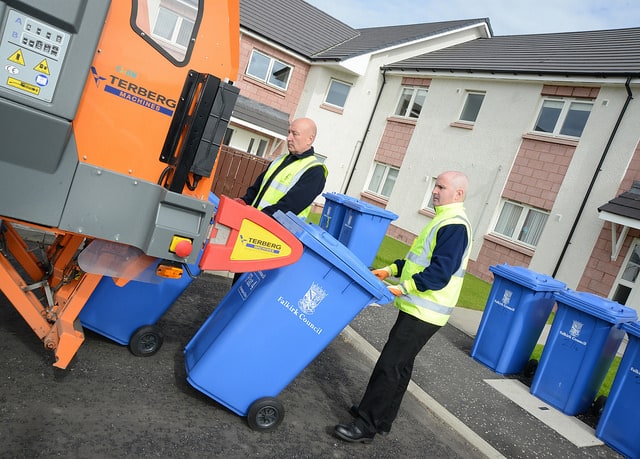
Significantly, the meeting also saw the council become the first in Scotland to agree to sign up to the Scottish Household Recycling Charter – which has been drawn up by the Confederation of Scottish Local Authorities (COSLA) and Zero Waste Scotland and seeks to encourage greater levels of harmony across waste services (see letsrecycle.com story).
In a report to the council’s executive on Tuesday (12 January) it was noted that there had been ‘significant issues’ with the costs for the processing of recyclable blue bin waste from households, which is currently handled by Suez (formerly Sita) at its MRF in West Sleekburn, Northumberland.
Notice
The short term arrangement with Suez, which has been in place for less than 12-months, is understood to have a 7-day notice period, so the council can move quickly to take its services back in-house.
The cost of processing the recyclables, which includes commingled paper, card, plastic bottles and pots, tubs and trays, alongside metal cans and tins, has risen to around £65 per tonne, from nearer £50 per tonne in 2015.
These price rises would put “significant strain on the service budget but can be managed in the very short term,” the council claimed.
The increase in costs has been blamed upon worsening commodities market conditions, with the cost of processing commingled dry recyclables increasing.
Moisture
Falkirk also claimed that it had seen an increased number of loads rejected by Suez as ‘not fit for processing’ due to moisture content – which had also resulted in penalty charges for the authority.
The council added that following a survey of other authorities by officers ‘this situation is evident across a number of local authority areas using external processing providers’.
Council officers had explored the option of moving to a new contractor – asking for quotes from four of the providers on the Scottish Excel Framework – however two of the companies asked declined to submit prices, one failed to respond and a fourth quoted prices in excess of those currently being paid by the council.
Cost
According to the report, the move would reduce the total cost the council pays to process the material to around £23.41 per tonne from the current level of £65 per tonne. The council would also retain any income received from the sale of the material. “This practice is now established successfully by a number of other councils and it is anticipated that the council would achieve similar results,” the report notes.
In 2014, Falkirk oversaw a radical overhaul of its waste and recycling collection regime, with parts of the district moving from a fortnightly to a three-weekly collection schedule for residual waste, as well as changes to timings for recycling collections.
Discussions between the council and the contractor over the handover of the service are ongoing, and no timeframe has yet been agreed.
Remunicipalisation Conference
- The benefits of bringing waste services in-house will be debated in-depth at the Remunicipalisation Conference in London on 28 January. For more information click here.

Register for free to comment