


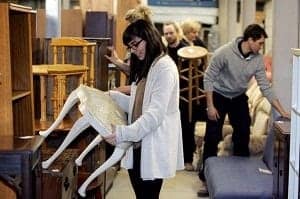
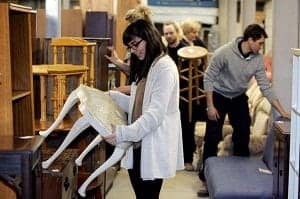
Over 400 million of products suitable for reuse are thrown away in UK households each year, a report published by the Local Government Association today (March 27) has claimed.
The report found that almost 615,000 tonnes of material which could potentially be reused is sent to landfill every year, equating to roughly 60 million in saving to council tax payers in the UK.
It goes on to calculate that the sale of textiles which could be reused would be worth up to 143 million, while the resale of reusable waste electrical and electronic equipment (WEEE) could potentially contribute 231 million per year.
The findings, which are based on Waste & Resource Action Programme (WRAP) estimates on the resale value of WEEE and textiles, builds on the LGAs 2013 Wealth from Waste report, which explored proposals that would increase the reuse of products and unlock value (see letsrecycle.com story).
Publication of the report follows a series of meetings between stakeholders from reuse organisations, the third sector and government, after the LGA established the Reuse Commission to find and develop opportunities within the market.
Recommendations
To achieve these potential savings, the Commission recommends:
Raising awareness of reuse through a national campaign, supported by signposting and communications from local councils.
Extending retailer take back schemes and encouraging more responsive pick-up and drop-off services. For example, partnerships between private and social landlords and universities to collect unwanted goods at the end of tenancies offer potential to drive reuse.
Providing a balance of incentives for consumers, such as rewards for reuse, and regulation to prevent certain materials being thrown away. Examples include a 2000 reduction on National Insurance Contributions for employment of an additional third sector worker.
‘We know lots of consumers already find new homes for their unwanted items, which saves taxpayers from paying for collection and treatment. But there are opportunities for far more reuse of a range of goods, and we want consumers to get involved and play a bigger part in this.’
– Mike Jones, chair of the LGAs environment and housing board
Commenting on the report, councillor Mike Jones, chair of the LGAs environment and housing board, said: Every year, a mountain of televisions, kettles, furniture and other items are thrown away, even though they are not broken and could be re-used. Were calling for councils and consumers to join together to find new homes for these goods, which will not only save taxpayers money, but reduce the amount of waste unnecessarily sent to landfill.
We know lots of consumers already find new homes for their unwanted items, which saves taxpayers from paying for collection and treatment. But there are opportunities for far more reuse of a range of goods, and we want consumers to get involved and play a bigger part in this.
Landfilling is expensive and the cost of disposing of unwanted but reusable items is 90 million, money which could be saved from our council tax bills.
Breaks
Councillor Clyde Loakes, chair of the LGAs Reuse Commission, added that he would like to see more tax breaks and designing opportunities to reuse goods at the earliest opportunity.
He said: Our recommendations look at ways to make reusing products easy and accessible and proposals to give consumers the confidence to buy reused goods. This will help raise the profile of reuse, and enable residents to think about ways that they could find new homes for household goods.
Meanwhile, the LGA also commissioned an online reuse survey, which asked 924 respondents in England what their motivations for reusing items and buying second hand products,
Related Links
The survey found that respondents were most likely to buy a second hand product based on its price, while a warranty would give them the greatest confidence in taking a second-hand electrical device.
A fifth of those asked would be motivated to buy a second-hand product that was no longer manufactured if it was available to reliably buy online.

Register for free to comment