

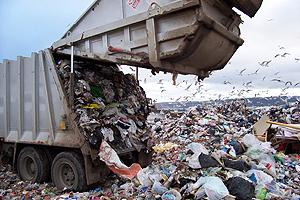
A ban on sending waste to landfill in the UK could save the country around 2.1 billion over 15 years, according to a report published by the Waste and Resources Action Programme (WRAP) last week.
The report, prepared by waste consultancy Eunomia, is an update of a study carried out in 2010 looking at the financial costs of a ban. It covers the feasibility of landfill bans across the whole of the UK, and what the costs and benefits of the system would be.
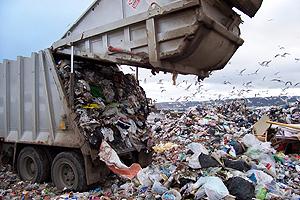
The study also claims that there will be clear benefits to society from introducing bans for materials such as metals, paper, card, textiles, wood and glass, although for food waste, any possible benefit is dependant on the technology used to treat the waste.
But, according to WRAP, a ban on sending WEEE to landfill would present a cost to society, partly due to the additional cost in collecting and recycling WEEE that would otherwise been sent to landfill.
The report states: The costs for collecting additional WEEE are highly uncertain, and heavily dependent upon the pre-existing infrastructure and how easy this is to adapt to collection of, for example, small WEEE items.
Similarly the report concluded that a ban on sending textiles to landfill, while resulting in an environmental benefit to society, would see costs to businesses increase.
Sorting
Two different approaches were examined in the study, one including a requirement to sort residual waste prior to it being sent to landfill as well as a ban on unsorted waste (effectively a ban on sending recyclate to landfill). The study found that climate change benefits of landfill bans are likely to be greatest where they are coupled with an obligation to sort materials.
.jpg)
According to the report, a ban on unsorted waste, encompassing all materials, would deliver a median net benefit to society of 910 million and greenhouse gas savings of 120 million tonnes CO2 equivalent over the period 2009-2024.
However, if only the materials that had a net social benefit (where environmental benefit exceeded costs) were considered, a ban on unsorted waste would have the potential to deliver a median net benefit to society of 2.1 billion and greenhouse gas savings of 73 million tonnes CO2 equivalent over the same period.
The report also claims that a ban on sending biodegradable waste to landfill would lead to a net cost to society, due to the increased use of residual waste treatment options such as incineration, or mechanical biological treatment. According to WRAP, these treatment methods would be used more widely under a ban and claims that the environmental benefits of switching away from landfill are lower than the additional costs of using these treatments.

Register for free to comment