

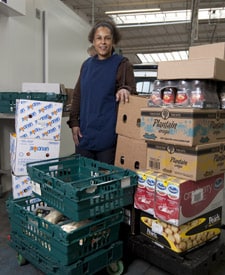
Food waste could be cut through redistribution of surplus products by retailers, according to a study published by the Waste & Resources Action Programme (WRAP).
The Food Connection Programme report, which was published yesterday (March 27), looks at the level and types of surplus food arising at the back of supermarkets and its suitability for redistribution to charity.

Research was conducted via six trial projects, which saw 5.5 tonnes of food that was not wanted diverted from the waste stream.
An average of around 25kg of food was collected on each store visit for redistribution during the validation exercise and 35kg during the trial process, representing a 40% uplift made possible by third sector collaboration.
Findings
It found that whilst tonnages of surplus food available at store level were small in comparison to the whole supply chain, the volumes were sufficient to deliver real benefits to those who need it via charities and food banks.
The second part of the project saw food waste charities FareShare and FoodCycle run a trial in the South West of England to build data and test processes that could lead to more surplus food being redistributed from back of store.
The collaboration resulted in an agreement tool for direct use between retailers and charities, which helps secure safe and appropriate redistribution in accordance with food safety legislation.
The report also warns that current barriers to rolling out redistribution from stores are still significant due to current capacity and resource limitations within the retail and third sectors.
Conclusions
Conclusions drawn from the trials were shared with the Industry Working Group to further inform the discussions taking place on redistribution throughout the whole supply chain. The Group has produced Guiding Principles to provide information for retailers, manufacturers, wholesalers, charities.
– Andy Dawe, head of food & drink at WRAP
Andy Dawe, head of food & drink at WRAP, said: Both the Industry Working Group and the trials were intended to build on the current good practice and better understand the challenges, and possible solutions, to make redistribution a more viable option for all involved.
By drawing on the experiences and expertise of both the voluntary and business sectors, we now have a better understanding of the surpluses available at store level and are closer to overcoming some of the barriers to redistribution, both at store level and across the supply chain.
The working group has laid the foundations which the whole sector can build upon. In order to realise many food waste prevention opportunities we now need to see more collaboration within the industry, and with charities, to expand on this good work and make more of this valuable food available to those that need it.
Tesco
Related Links
Greg Sage, community director at Tesco, added: We want to ensure that our surplus food goes to helping feed people in need. We are already working in partnership with FareShare on our Neighbourhood Food Collections and donations of surplus fresh food from our distribution centres and online grocery stores.
We were delighted to have been involved in the WRAP trial. We would like to extend this work in the coming year, and we are working closely with FareShare and FoodCycle to achieve that.

Register for free to comment