


The Waste & Resources Action Programme has dismissed suggestions it has changed its stance on the preferred kerbside collection method.
The organisation, known as WRAP, is a strong proponent of source-separated collection systems but has been accused of publishing research which shows that commingled schemes produce a greater yield of material.
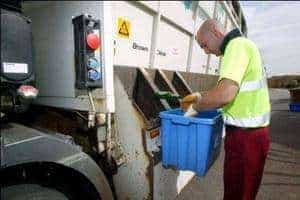
Consultancy WYG noted in a recent report on kerbside collections that research published by WRAP in June 2009 stated the difference between source-separated and commingled kerbside collections in terms of tonnage yield was only down to commingled schemes usually operating with a larger receptacle.
The consultancy then claimed that WRAP had back tracked on this when, in March 2011, WRAP issued a report on behalf of the Welsh Assembly Government which concluded that with all factors being equal – commingled collection schemes generated a higher yield of recyclable material.
According to WYG, the 2011 WRAP report shows that commingled collections had a 12% higher average yield than weekly kerbside sort schemes and 22% more than kerbside sort for fortnightly collections (see letsrecycle.com story).
Defence
However, WRAP has defended the findings of the Welsh study, entitled Kerbside Collections Options: Wales and denied that the results of the report indicate a change of stance in support of commingled systems.
WRAP previously decried commingled collections as having cost and quality disadvantages compared to source separated systems (see letsrecycle.com story https://www.letsrecycle.com/news/latest-news/councils/commingled-has-cost-and-quality-disadvantages-claims-wrap).
A spokesman for WRAP said: WRAP has not changed its position, but this is a very complex issue where one size very definitely does not fit all. With regard to the WRAP report Kerbside Collections Options: Wales.
WRAP was given a clear brief from the Welsh Government to provide an evidence based report to support their ambitious aims to tackle recycling in Wales. The analysis draws in part on the specific circumstances in Wales and 6 specific case studies, so the results will not translate directly to other countries.
The Kerbside Collections Options: Wales assessed six local authorities across the principality using a variety of different collection methods.
Local choice
Furthermore, the spokesman added that WRAPs standpoint is the choice of collection systems should be made the relevant local authority, taking into account local factors. However, it states there must be due consideration to wider national policy, objectives and priorities.
He said: The recycling service will need to be considered in the context of other services provided and as part of an overall service profile which may well include food and garden waste as well as refuse.
It should go without saying that any recycling scheme, irrespective of the containers used, or how materials are collected and sorted, should be reliable, well run and take account of the needs of the residents and where they live.

Register for free to comment