
The British Standards Institution has made the first step towards establishing a regulatory standard for bioaerosols by developing a draft technical specification document on monitoring moulds in the ambient air.
In a draft document, the certification body, known as BSI, claimed that bioaerosols, and bioaerosol pollution, need to be addressed in a formal context.
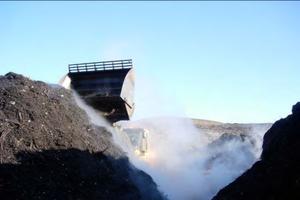
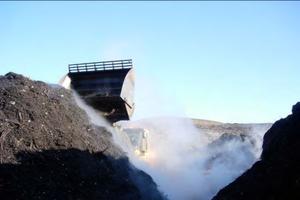
Bioaerosols are airborne particles from biological origins, which, depending on the emission source, vary in composition. They can be generated during the composting process.
Perceived health risks related to bioaerosol pollution, such as respiratory diseases, allergies and cancer, have been raised as a contentious issue on a number of occasions. And, in April 2010, the Health and Safety Executive said bioaerosols continue to be a health concern (see letsrecycle.com story).
The technical specification is not a full British or European standard, and, as yet, a standard has not been mandated by the European Commission. This is because it does not address a pollutant covered specifically by a directive.
However, a UK permit issuer could include the technical specification as a provision of its permit, if the permit issuer, such as the Environment Agency or a local authority, was concerned that the determinant posed a health or safety or environment impact.
The Environment Agency has sought to limit the potential impact of bioaerosols by becoming more stringent with regards to issuing permits to companies operating within 250 metres of a sensitive receptor, such as a home or workplace (see letsrecycle.com story).
Specification
The technical specification outlines a sampling method for monitoring moulds in ambient air quality. The specification describes the method for measuring moulds in ambient air in order to identify, quantify and characterise bioaerosol pollution in ambient air resulting from emissions from different sources.
It states that standardised methods for the sampling, detection and enumeration of moulds are important in order to create comparative assessments of moulds in ambient air.
Commenting on the importance of the draft document, Jason Southgate, specialist consultant on bioaerosol monitoring at environmental consultancy AEA Technology, said this was an important step in establishing a standard for bioaerosols.
He said: Obviously with the waste industry growing there is a big potential for these organisms to proliferate in the environment and add more to the natural background. And, it becomes a potential health risk to the general public and animals, and the like.
The document will be subject to review and will then be deuced whether to convert it into an internationally recognised standard.
Existing
The Environment Agency and sector trade body the Association for Organics Recycling (AfOR) have already published a monitoring document on bioaerosols, entitled Standardised Protocol for the Monitoring of Bioaerosols at Open Composting Facilities.
This document was first published in 1999 and the latest updated version was made available in 2009. The EA/AfOR document offers guidance on meeting permit requirements and standardised monitoring of micro-organisms.


Register for free to comment