

In its first year, pEPR expected to provide £1.44 billion to local authorities to cover the cost of managing household packaging waste. Producers were ultimately invoiced £1.46 billion, and £1.56 billion has now been set as the target for the second year of the scheme. Together this equates to over £3 billion to improve recycling infrastructure.
But while the funding mechanism has been widely debated, concrete examples of how the money is being spent have so far been limited.
A new upgrade project at Masons Materials Recovery Facility (MRF) in Suffolk is beginning to provide some answers.
What is the pEPR money funding?
The project, developed jointly by Suffolk County Council and waste management company Biffa, is one of the first major infrastructure investments publicly linked to pEPR funding.
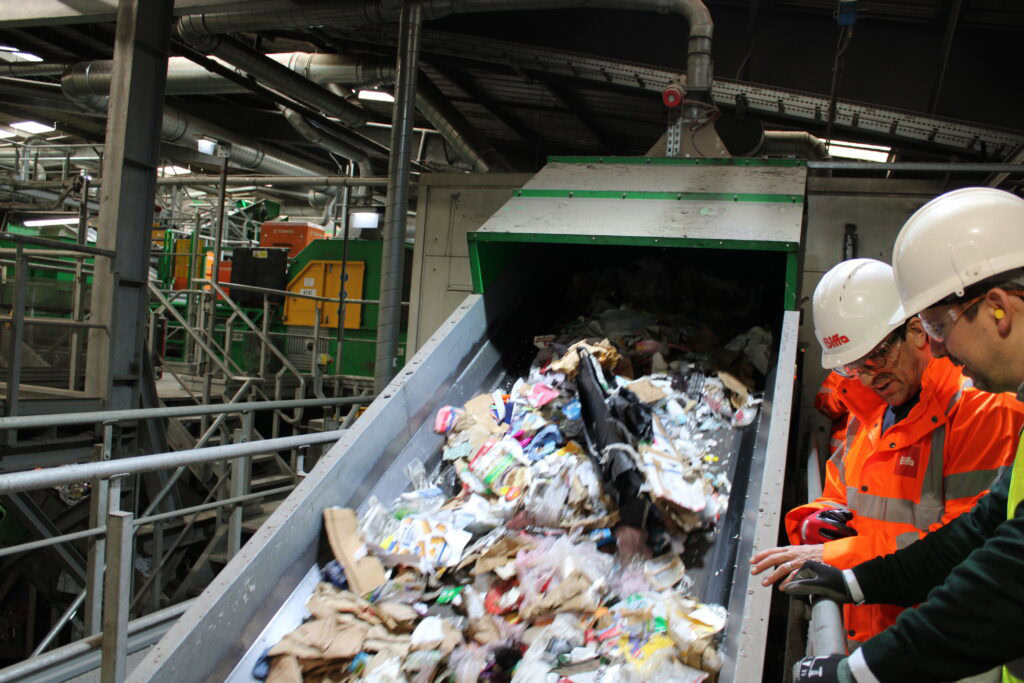
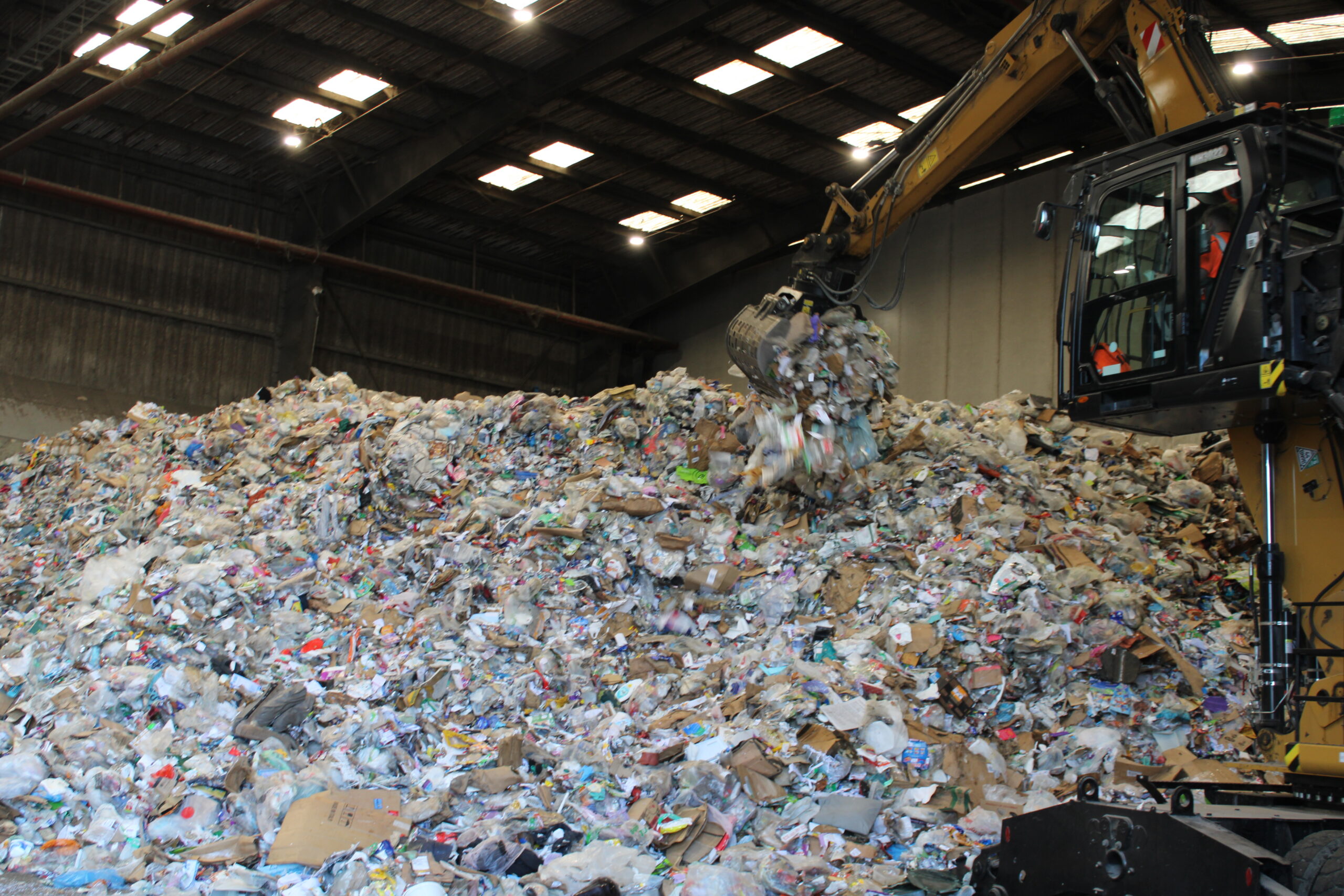
The Masons MRF near Ipswich currently processes around 80,000 tonnes of dry mixed recycling each year, receiving kerbside collections from four district authorities across the county.
A £12 million upgrade is planned to prepare the facility for new recycling collections being introduced across Suffolk from 1 June 2026.
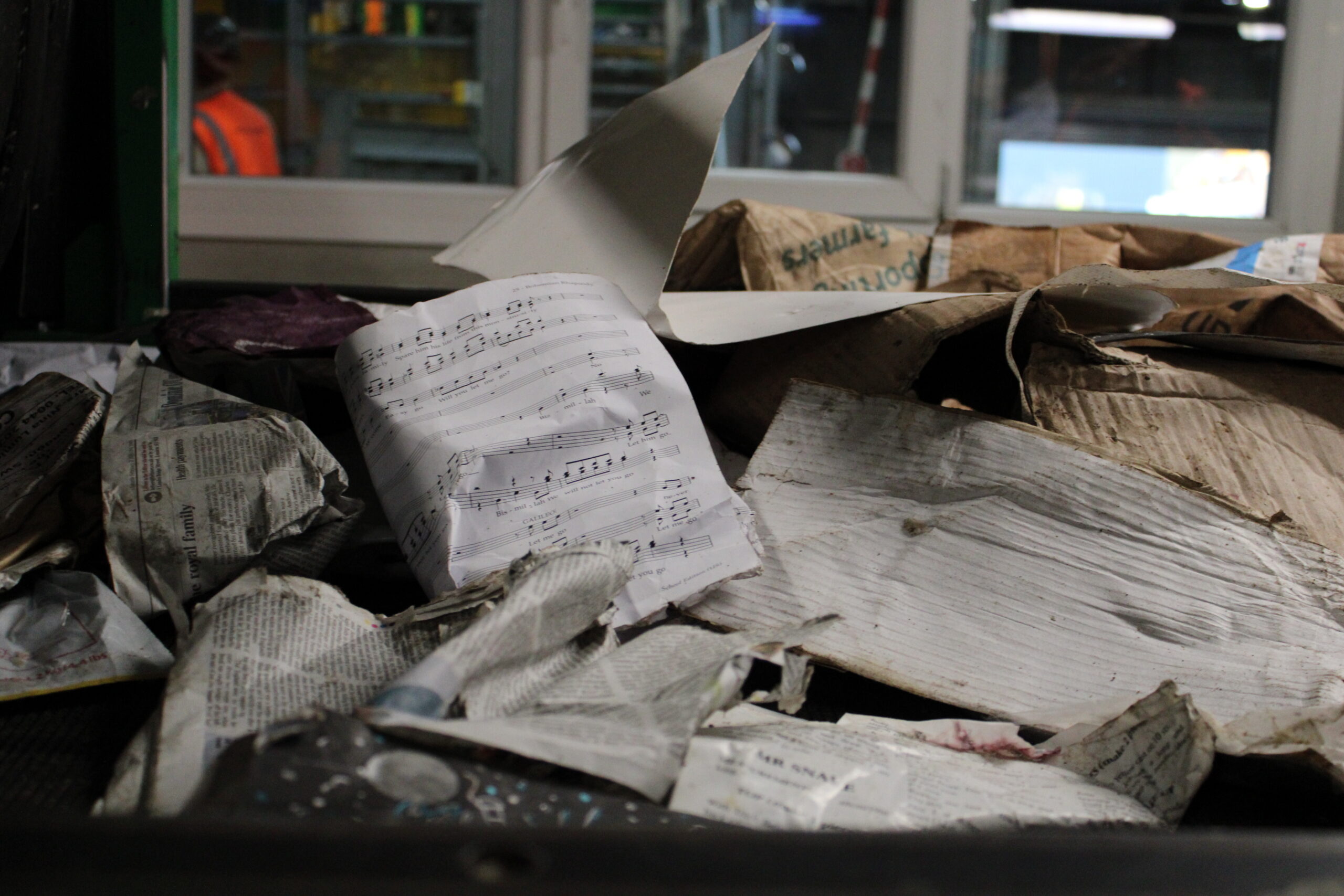
Under the changes, paper will be removed from the mixed stream and collected separately. With this material absent, the facility will be rebranded as a Plastics Recovery Facility (PRF) and focus on processing glass, metals and plastics, including the construction of a new glass processing plant delivered by Impact Air Systems.
Christopher Hindle, Operations Manager at Masons, explained: “The big change for us is that paper will go out and be replaced with glass.
“The mechanical sorters inside the plant that currently separate paper are going to have to change to process glass, which means that we have to build a glass plant on an already tightly laid out site.”
The upgrade will also introduce greater automation, with near-infrared (NIR) optical sorting technology reprogrammed to target the new material streams and recover a wider range of recyclables.
Planning permission for the project has been submitted and is expected to be approved in late March 2026.
Construction is scheduled to take around three months, during which recycling from Suffolk will be diverted to Biffa’s Aldridge and Edmonton MRFs.
Funding the Masons MRF upgrade
The upgrade is being funded jointly by Suffolk County Council and Biffa.
Councillor Chris Chambers, Cabinet Member for Waste at Suffolk County Council, explained: “There were two options on the table: do we invest in 50/50 or do we not?
“We’ve got a good partner in Biffa and it’s an investment to save long-term for us, so it was really a no brainer.”
The total cost of the project is around £12 million, with each partner contributing approximately £6 million. Suffolk County Council’s share of the investment is largely coming from the funding it has received through the new pEPR system.
The authority received £6.9 million in pEPR funding, of which £5.9 million has been allocated to the Masons MRF upgrade.
The remaining £1 million has been used to support improvements at two of the county’s household waste recycling centres, including a replacement site in Ipswich and upgrades at its Stowmarket facility.
Steve Palfrey, Assistant Director for Waste and Environment at Suffolk County Council, added: “It would have been much more difficult without the existence of pEPR.
“As a council, we’re not in a position where we’ve got excess capital to invest. But with the first of pEPR money, we’re about to get in the ring for this investment.”
‘Driving and delivering change’
While much of the investment is focused on infrastructure, the changes are designed to support significant improvements to household recycling services.
From 1 June 2026, Suffolk residents will begin separating paper and cardboard from other recyclables. At the same time, councils will expand the range of materials collected at kerbside, including glass, cartons and flexible plastics.
Suffolk currently holds an average household recycling rate of around 40%, below the national average of 44.6%. Officials believe the new services could increase recycling rates by capturing materials that currently go into the residual waste bin.
Palfrey added: “It’s a really good case study – new money coming into the system to drive and deliver change.”

Register for free to comment