


The Chester-based firm first signed the conditional deal to treat the borough’s black-bag waste in December 2012, but progress has been slow and Material Works has still not secured a site or planning permission for the “groundbreaking” facility, despite previously having a deadline of December 13 2014 to do so.
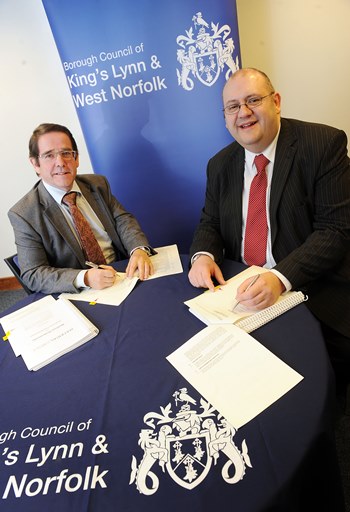
The 16-year deal is conditional on Material Works obtaining planning permission and an environmental permit for the development, as well as confirmation that the borough council will receive recycling credits from Norfolk county council.
And, according to the council, Material Works must also secure an ‘end-of-waste’ certification for its proposed waste treatment process, which the firm claims will recycle up to 96% of the borough’s residual waste and produce an extruded polymer product called Rexylon.
The company claims to have secured a ‘take-off’ contract for the end market use for the product, which is a plasticised wood replacement product for use in the construction industry.
According to Material Works “a number of additional interested parties have also expressed a wish to use this material in their manufacturing processes”, and a spokesman for the firm said there was a “huge market” for the product.
Extension
Following an update on Material Works’ progress at a borough council cabinet meeting last night (November 4), councillors agreed a three-month extension to the deal – with potential for up to three further three-month extensions – subject to the firm being able to ‘demonstrate progress against the conditions’.
[testimonial id = “77” align=”right”]
In granting the extension, the council said it will not be liable for any additional cost or risk.
The council said it hoped that the facility would be operational by the end of 2017, which would be five years after the deal was first signed.
Borough councillor Brian Long, cabinet member for the environment, said: “While it is disappointing that we are not in a position to proceed at this stage, we are still firmly committed to recycling as much of our black bin waste as possible and at present the technology proposed by Material Works promises to be the most economically and environmentally sustainable way of achieving this.
“The council is satisfied that the company is making progress against our conditions and we are realistic about the work involved in establishing such cutting-edge technology, hence our decision to extend the timeframe in which the company has to meet our conditions.”
Demonstrator plant
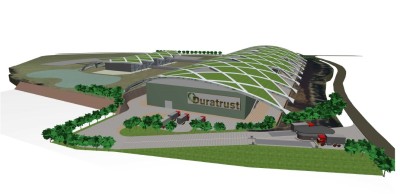
Material Works said it had has identified a site in Norfolk for both a demonstrator plant – which will house a 1000-litre ‘Saltus’ unit capable of handling and processing up to 10,000 tonnes per annum of mixed wastes – and a site for the main operational facility.
The main facility is designed for a throughput of up to 70,000 tonnes per annum, including capacity for 35,000 tonnes of commercial and industrial waste per year.
Locations of the two sites were not specified by the firm, which said it is currently involved in ‘confidential negotiations’ with the site owners and has commenced the planning process.
Material Works
Managing director of Material Works, Robert Billson, said he was “delighted” to be granted a contract extension but that he was “very much aware that it has taken longer than we had planned to reach this stage”.
He explained that the company had sought an extension to the deal due to the “highly complex nature of the arrangements we have to put in place with our funders for this major capital project”.
Material Works announced in January 2014 that it had secured £100 million funding to construct the “groundbreaking” facility in King’s Lynn, having secured the bulk of the investment from UK-based funder with Sri Lankan connections called Pan Eurasia.
It said this funding agreement would also see a similar £22.4 million plant built in Sri Lanka with a smaller capacity.
Mr Billson said: “With funding now being put in place and the granting of the extension, we shall be able to push ahead with this £100m investment in King’s Lynn and West Norfolk and the creation of over 150 jobs in the area.
“We will also be able to announce the location of the two initial sites as soon as our negotiations are complete and the planning process has been progressed. Once these plants are in place, up to 96% of waste produced in King’s Lynn and West Norfolk will be recycled and reused, which will be a quite remarkable figure and a blueprint for waste management in the future.”

Register for free to comment