

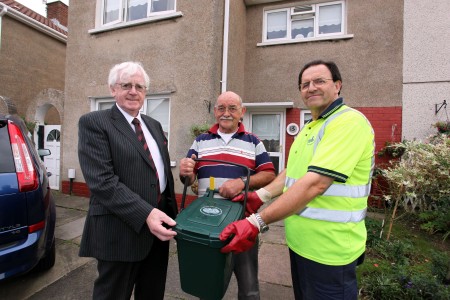
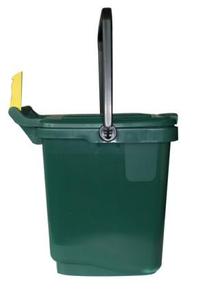
Householders can flip up the indicator – which has been specially developed by Leeds-based bin manufacturer Straight in conjunction with the council – to let the council's in-house collection crews know that they need more of the compostable liners used to store food waste in inside their kitchen caddies.
Wayne Curtis, waste operations officer for the local authority, explained that the 'BagFlag' was an important part of the new system.
“We listen to what matters to the residents of Neath Port Talbot and, through our successful partnership with Straight, we believe that we have designed a simple, but very effective, method of receiving replacement bags,” he said.
An increasing number of local authorities are introducing kerbside collections of household food waste, with different approaches to dealing with the issue of leaving out replacement liners.
For example, the service operated by SITA UK on behalf of Calderdale council in West Yorkshire involves residents being advised to leave a note on their kerbside caddy if they require more liners, whereas Merton borough council, in London, advises residents to use a special telephone helpline to request more liners.
BagFlag
The BagFlag indicator is made from bright yellow rubber and is fully waterproof, which Straight said makes it both durable and highly visible. It can be fitted either during the production of kerbside caddies or retrospectively, but with it being attached to the caddy at all times, its developers claim it cannot be lost.
Jack Baber, new product development manager at Straight, said: “Straight continues to heavily invest in new product development to bring innovative products to market. We work closely with many local authorities to identify their requirements, develop their ideas and make their product suggestions a reality.”
Collections
Neath Port Talbot, which achieved a 35% municipal waste recycling and composting rate between April and June 2009, has added the food waste collections to its existing weekly kerbside source-segregated collections of mixed glass, cans, plastics, textiles, card and paper and green garden waste.
The council said that food waste collected under the new service, which has been funded through a Sustainable Waste Grant received from the Welsh Assembly Government, will initially be treated using in-vessel composting.

Register for free to comment