

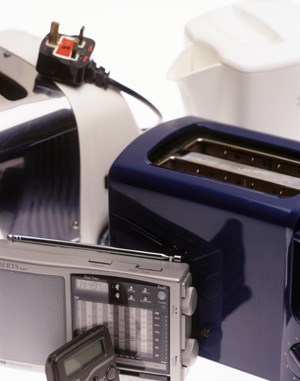

An awareness campaign was originally launched by the department for business (BIS) and the Waste and Resources Action Programme (WRAP) in December 2008, looking to focus on small WEEE in the build up to Christmas (see letsrecycle.com story).
With its focus on directing householders to use WRAP's Recycle Now website to find out where they could recycle 'Christmas WEEE' – small electrical goods – there was a feeling within the sector that it was limited in scope.
However, a pilot campaign was then operated in 12 local authority areas in March and April 2009, using radio and press advertising and marketing materials produced for councils which featured the strap-line 'don't bin it, bring it'.
And, it has now emerged that, while the results of both the national campaign and 12 pilots are being still being evaluated, the pilot areas saw an increase in WEEE collection rates.
Roll-out
Commenting on the impact of the campaign at a London Remade event on Monday (July 13) Leigh Holloway, who is a member of the stakeholder body the WEEE Advisory Board, said: “The initial assessment is that WEEE take-back has increased by 30% as a result of the awareness campaign; they hope to roll it out nationally.”
The success of the pilots was confirmed by Graeme Vickery, from the environment and technical regulation directorate at BIS, who added that “what we're now planning to do is roll out the materials nationally in England”.
It is understood that figures from the pilot councils also revealed an increase in householder awareness of being able to recycle WEEE at civic amenity sites as a result of the campaign.
As a result, BIS is now expected to make the campaign materials available to all local authorities in England and Wales via the WRAP website, as well as developing engagement with retailers and rolling out similar messages across the UK.
A spokeswoman for WRAP confirmed that the roll-out was expected later this year.
Figures
The move to boost consumer awareness comes as EA figures show that, despite a fall in the amount of household electrical equipment being placed on the market, the tonnage of household WEEE collected has actually increased.
Between January and March 2009, there was 287,032.420 tonnes of household electrical equipment placed on the market, of which 38.71%, or 111,130.376 tonnes, was collected for recycling.
This compares favourably with the 30.11% reported for the same period in 2008, and the 30.66% recorded for 2008 as a whole (see letsrecycle.com story), and comes despite the actual amount of household electrical equipment being placed on the market dropping by 15.97% across the same period.
This suggests the UK is moving in the right direction as the EU moves towards introducing percentage-based WEEE collection targets for member states which could see it have to collect up to 65% of household WEEE (see letsrecycle.com story).
In simple tonnage terms, the amount of household WEEE collected in the first quarter of 2009 is also higher than that recorded for any of the four quarters of 2008, and is 8.37% up on the tonnage for the same three months last year.
If the performance for quarter one was repeated across the rest of 2009, the UK's WEEE collection rate would be 7.28 kilograms per head of population, well in excess of the 4kg per head currently expected by the EU.

Register for free to comment