
The development near Bristol is seen as significant in terms of the water and sewerage sector getting involved in the treatment of municipal food waste, particularly because last year it was a topic considered by the Office of Fair Trading.
An OFT report looked into the issue of the water and sewerage sector developing AD facilities and whether there was the potential for a referral to the Competition Commission to see if there was any unfairness because of potential market distortion.
Assets
One of the points discussed by the OFT related to some concerns in the waste sector that the water sector should be seen almost as public sector bodies which have inherited assets and that accordingly the water companies could have an unfair advantage when developing AD plants. But, the Office of Fair Trading did not, in its findings, call for the divestment of sewage sludge plants to enable more competition.
However, its response was cautious and it found: the key potentially relevant remedy exclusively available to the Competition Commission would be the power to impose vertical divestment of sewage sludge treatment facilities. We considered that it would not be proportionate to the scale of the barriers and distortions to competition identified by the market study and to the size of the sector to make a market investigationreference primarily to allow for consideration of such a remedy. (See OFTreport opens as a PDF).
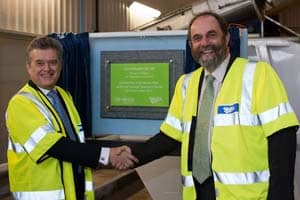
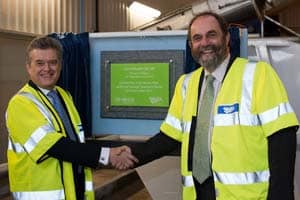
The support for the Bristol project from David Heath came at the plants official opening on December 3. Located at Malaysian-owned Wessex Waters sewage treatment works in Avonmouth it will be operated by the firms subsidiary GENeco.
The facility will treat up to 40,000 tonnes of food waste every year from homes, supermarkets and businesses across the South West generating up to 10 GWh of energy which will be fed into the national grid. Digestate produced by the anaerobic digestion process is expected to help local farmers reduce their costs and reliance on non-organic fertilisers by being used as a soil fertiliser.
Opportunity
Mr Heath, who is a West Country MP, said the government was actively supporting the sector which not only provide jobs in construction and the waste industries but also helps British companies develop export opportunities.
He said: We see here the ideal balance between good business sense and environmental protection. A growth investment which helps business reduce its costs and build new commercial and job-creating opportunities, while resolving an environmental problem. Money has gone into creating new jobs and an economic growth opportunity rather than paying the costs of disposing of Bristols food waste.
Mr Heath added: The GENeco plant is also unique by being the first food waste anaerobic plant in Britain to be built in a sewage treatment works. Water companies can provide a significant boost to the expansion of waste food anaerobic digestion in this country by using their expertise from treating sewage.
This could potentially create thousands of new jobs and generate significant amounts of renewable energy, while solving a major environmental issue in the disposal of waste food.
Solution
The Minister was shown around the plant by GENeco general manager, Mohammed Saddiq.
Commenting on the facility, Mr Saddiq, said: The opening of the food waste plant builds on the success and experience of using anaerobic digestion to treat sewage sludge and generate power. Through this investment we will produce significantly more renewable energy, while also providing a sustainable solution for dealing with food waste which traditionally goes to landfill.
GENeco is looking to expand its work in the field of food waste treatment and has been shortlisted for a 15-year organic waste treatment contract with Cardiff city council (see letsrecycle.com story).
Wessex
Wessex Water has operated AD plants at Bristol sewage treatment works for a number of years, generating around 30 GWh of renewable electricity from sewage sludge. The Avonmouth plant is Bristols first food waste AD plant as well as the UKs first to be built at a sewage treatment works.
Related links
Wessex Wateris owned by Malaysia’s YTL Corporationand Wessex chairman Colin Skellett said the firm was building AD plants at other sites in the region to help tackle the problem of growing electricity and waste disposal costs.

Register for free to comment