



Joy Blizzard, chair of LARAC
My hope for 2013 is that politicians grasp the real value of the circular economy rather than always being stuck on this linear idea that the only way we are going to get out of recession is to consume and consume. I hope we are going to get more than lip service and that resource issues do not slip down the agenda, although I doubt that will happen.

Another hope is that we see a really good, radical waste prevention plan produced when the government puts together its waste prevention strategy by the end of December 2013, with food waste prevention taking pride of place. If we look at just how much local authorities are spending on collecting and disposing of food waste that could make a huge difference.
When people talk about food waste it frustrates me that they often miss out prevention. While technologies such as anaerobic digestion have their place for treating this waste stream, that should only be for unavoidable food waste. Preventing food waste can also save families 50 a month.
The Judicial Review over commingling in 2013 is likely to lead to more soul searching in the way we choose to do recycling and that can be no bad thing. Whatever the outcome of the Review, I think that quality will be and should be an issue as we have to future proof against people not being prepared to take our low quality material.
David Palmer-Jones, chief executive of SITA UK

I would wish for Government to grab the green growth and employment opportunities offered by the waste management sector with both hands by converting the rhetoric of the circular economy into potent policy levers, I fear my prediction is not the same.
However, based on present indications from Defra, my predictionis that 2013 will not herald significant new initiatives on the wider resource agenda.
The sector continues to make a strong environmental and business case for driving greater circularity of resource use, but we still make policy in a piecemeal fashion.
So my challenge to Government is that I hope you will prove me wrong!
Jeremy Jacobs, head of the REA’s Organics Recycling Group (formerly AfOR)
The New Yearis an exciting time for us as we are merging with the Renewable Energy Association (REA) and will have a stronger lobbying voice which will be important going forward, especially when pushing for proportionate and fairer regulation that will not put more operators out of business. It is one of the big stumbling blocks for operators.

The end of waste debate is one that plays on our minds getting resolution on that in 2013 is something we should be aspiring towards. The whole debate over what qualifies as recycling is an important one.
The other thing from our point of view is working hard to promote the quality image of composts and digestates getting the message out abouttheir beneficial uses. Using compost for enhancing soil quality and reducing soil erosion does not get enough press.
I think the economy is going to be flat this year. Local authorities will continue to be under tough financial constraints so will have to be more efficient in managing their operations so they can continue coming out on top.The other thing which is important is working with local authorities to improve the quality of inputs into sites.
Despite the cancelled rise in duty, fuel costs continue to be one of the biggest costs for operators. Smart working will be important and enhancing the value of outputs.
Matthew Farrow, director of policy at the ESA

Back to back Ashes wins would be my main hope for 2013 but with my ESA hat on it would be good if 2013 was the year in which the future of commingled collections was resolved with the Judicial Review settled and the ESA-led MRF Code of Practice delivered by Defra.
Another big issue will be the European Commissions review of waste targets with waste performance so variable across the EU-27 there is a tricky balance to be struck between stretching the best performers while putting real pressure on the worst countries to at least get the basics right.
And lastly Id like to see hazardous waste policy get a bit of airtime this year there are some real challenges around delivering the Defra Hazardous Waste Strategy and ESA will be publishing its views shortly.
Ray Georgeson, chief executive of the Resource Association

Aside from Sir Alex Ferguson retiring in a blaze of glory the day after United beat Arsenal at Wembley to win the Champions League, my expectations for 2013 remain hopeful for some Government and waste industry recognition that our future green economy needs a vibrant manufacturing base which is resource efficient itself and contributes to the job creation and resource security that everyone says they want.
The gap between the high-level thinking going on about circular economy and the reality of current policy is still yawning and I hope in 2013 it will start to narrow. We will do well to remember the role of recycling and reprocessing in the development of the circular economy model, and not throw the baby out with the bathwater in our excitement about new services and delivery models.
Margaret Bates, Professor of Environmental Science at Northampton University

I think politically not much will happen in 2013 in terms of the environment. The government needs to have the political will to do something for the environment and not just worry about getting voted in next time and have some balls about decisions that need to be taken. They need to have an intelligent grown up debate about thermal waste treatment and not just pay for another study on the health impacts and let local authorities fight all the battles. I dont think we can get sustainable waste management without some form of thermal treatment in the UK.
The waste prevention strategy which the government is developing should see more focus higher up the waste hierarchy. I think we will probably see an increase in pressure on producers and an attempt to apply producer responsibility with not necessarily enough focus on who the producer is or where the responsibilityshould be sometimes householders get too easy a ride.
As we become more focused on things such as waste prevention and increasing recycling it becomes likely that the government will look more and more at who is to blame and I hope that blame is allocated correctly and I would like them to focus on what has the biggest impact not necessarily, for instance, on plastic bags.
Chris Dow, chief executive of Closed Loop Recycling
Lord de Mauley introducing a strong mandatory MRF Code of Practice and an extensive review of PRN/PERN have got to be top of my wish list for 2013.
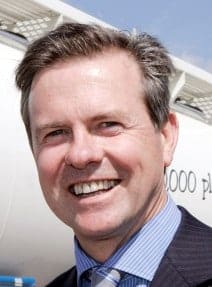
I believe that the Code of Practice scheme must be mandatory and enforced via the Environmental Permit regime. It is absurd to believe that illegal exporters would join the scheme if voluntary. I also believe that independent audits should be unannounced and should include physical sampling by the independent auditor. Without this check, illegal exporters would be able to create false but seemingly compliant sampling documentation. The audit might also include a holistic view of ISO systems documentation and customer feedback regarding quality.
With a mandatory MRF Code of Practice and greater enforcement of the Trans-Frontier Shipment Regulations, UK re-processors will feel confident to invest in additional capacity which will lead to the creation of substantial numbers of green jobs and will reduce the UK’s imports of virgin raw materials.



Register for free to comment