


I don't doubt there are quite a lot more illegal activities occurring. It's a much, much bigger problem than we initially thought
Phil Gibbon, project manager for Environment Agency's national enforcement service
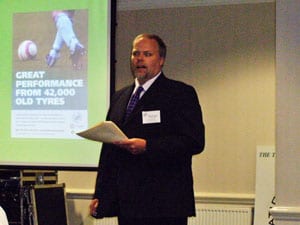
Speaking at the Tyre Recovery Association's forum day, held in Solihull last week (July 9), Phil Gibbon, project manager for the Agency's national enforcement service, also revealed that illegal tyre activity was a “much, much bigger problem” than it had initially thought.
And, he called on the legitimate tyre recovery sector to help address the issue by providing information which would allow the Agency to secure “big hits” against those making “big money” from illegal tyre operations.
In terms of the scale of the problem, Mr Gibbon said that the Agency's investigations had indicated that, of the 40 million waste car tyres produced each year, “there could be several hundred thousand tyres being moved by the illegal sector”.
Describing illegal tyre activity as “quite a big problem”, he said: “Our officers are telling us they're seeing a lot more illegality but we have only got 35 illegal sites on our books, which is quite alarming.
“I don't doubt there are quite a lot more illegal activities occurring. It's a much, much bigger problem than we initially thought.”
Exports
Of particular concern to the Agency, he noted, was the impact and cost of tyre exports, which he described as a “huge, emerging trend”, as increasing amounts of material is exported to markets such as Vietnam and Hong Kong.
“We're working to find out what's happening,” he said. “It's not necessary illegal but if they're classed as waste they need to be treated as such.”
Mr Gibbon revealed that the Agency had already prevented the export of close to 350 containers of tyres so far in 2010 and currently had four major investigations ongoing into tyre export.
He also stressed the cost to the Agency of repatriating containers of waste tyres, which he said was £30,000 a container – money the Agency would then look to recover from those involved in the activity.
Approach
Mr Gibbon claimed that the Agency was now taking a “proactive” rather than “reactive” approach to dealing with the illegal tyre problem, but said that the key to this was improving its intelligence, which he said required the “vital” feedback from legal waste tyre collectors.
“Chipping away at the periphery on illegality isn't going to help you. We need to go after the people who are making the big money. We're going after the big risks,” he said.
“It's not just about prosecutions. We want to look at how illegal operators are changing how they are operating due to our pressure,” he added. “It's about identifying all avenues of illegal activity and how we can disrupt that.”
Responsible Recycler Scheme
Also speaking at the Tyre Recovery Association's forum day was the Association's recently-appointed president Mike Wilson, who used his speech to highlight the benefits of the TRA's ‘Responsible Recycler Scheme'.
The scheme aims to provide a guarantee to tyre users that their waste tyres are being collected and disposed of in an environmentally sound, responsible way, with Mr Wilson describing it as “a best practice scheme that all our industry should aspire to”.
In particular, he called on tyre retailers to sign up, saying they should view it as a “badge of honour”. The comments come one month after the TRA launched a dedicated recycling campaign aimed at promoting responsible tyre reuse to coincide with the Fifa World Cup in South Africa (see letsrecycle.com story).
Sapphire
Other speakers at the event included Tim Stott, business development manager for Sapphire Energy Recovery, a subsidiary of cement company Lafarge Aggregates, which is tasked with sourcing ‘alternative fuels' for use in its cement kilns.
Mr Stott revealed that Lafarge was forecast to increase its tyre consumption over the next few years, and also noted that tyres had proved “relatively recession resilient” with Lafarge.
“Proportionally tyres have remained relatively stable during a very severe cement recession,” he added.
The event also heard from representatives of European tyre recycling bodies, such as the SIGNUS producer responsibility scheme in Spain.

Register for free to comment