
The Agency is allowing SITA to use 1,000 tonnes of material from its mechanical biological treatment (MBT) plant in Northumberland to restore the former Sister landfill site in Morpeth.
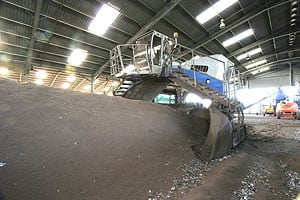
 Grey compost at SITA's Ellington facility after it has been composted |
The announcement gives a seal of approval for the quality of SITA's MBT residue and paves the way for future exemptions, which are awarded on a site-by-site basis.
Speaking to letsrecycle.com on Friday, Stephen Wise-Merry, head of organics at SITA UK, said: “This is the first large-scale exemption for MBT residues in the UK. We've been demonstrating the soil conditioner is doing a good job. There is a conception MBT residues are poor quality but we have demonstrated that our process is successful. ”
SITA is one of the two companies, along with Viridor Waste Management, bidding to run MBT plants to treat Greater Manchester's waste (see letsrecycle.com story).
Process
SITA's MBT process sees black bag waste from Newcastle city council taken to a 120,000 tonne-a-year capacity resource recovery centre in Byker, Newcastle, which was opened in the Spring.
The plant shreds material and screens it to remove recyclable streams. The biodegradable component of the waste, which makes up about 40% of the waste, is then taken 20 miles north to SITA's indoor composting plant at Ellington, Northumberland.
The process takes approximately 10 weeks and can produce around 20,000 tonnes of “grey” compost every year.
Quality
Julie Craigie, area manager for SITA UK, said: “The granting of the exemption to spread the in-vessel produced compost to land is a demonstration of the quality of the product we are producing here and of the beneficial nature of the product in helping to improve poor quality land.”
She added: “Because of the nature of materials used to produce the soil conditioner, the end product is classed as recovered waste and the Environment Agency has stringent quality standards that must be met before they will allow the material to be used for landscaping and restoration purposes.”
Now SITA is negotiating with local landowners and land restoration companies in Northumberland who need large amounts of material to landscape their sites.
Mr Wise-Merry said: “We are confident that we will find other markets. The process of applying for exemptions is ongoing.”

Register for free to comment