


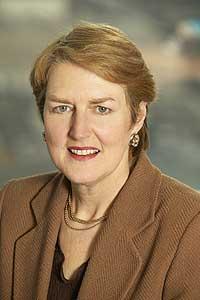
Decisions on waste infrastructure are too difficult to be dealt with at a local level under the governments localism agenda, according to the former chief executive of the Environment Agency, Baroness Young of Old Scone.
Speaking in a debate marking the second reading of the Localism Bill proposals in the House of Lords yesterday (June 8), Baroness Young, who was at the helm of the Agency between 2000 and 2008, warned against localism being used to decide on major strategic projects, such as waste.

And, she pointed towards the stultified situation with waste infrastructure before decisions on waste management plants were made at a scale above local-level as a prime example of why this was the case.
She said there were some decisions that are simply too difficult to make at a local level. Waste management is a prime example. Our waste management infrastructure was stultified until we started to look at making decisions about the location of waste management facilities on a level higher than the local level.
Decisions had to be made about these very important facilities, but no local community was going to accept them voluntarily.
Baroness Young, who is a crossbencher, added: We need to make sure that we do not see localism as the sine qua non of the whole planning system and recognise that some issues are best not dealt with on a local basis.
Under the Localism Bill proposals, which were originally published in December 2010 (see letsrecycle.com story), the government aims to replace regional strategies with a duty to co-operate. This would aim to ensure councils and other public bodies work together on strategic planning issues.
But, Baroness Young claimed that, as it stood, this proposal was a bit woolly, explaining it is only about strategic priorities and they have not yet been defined.
We have to question whether that will deliver the clear strategic framework, on a scale greater than local, that businesses, developers and investors are crying out for, she said.
There are no sanctions if local authorities fail to collaborate and there needs to be a reserve power of intervention by the Secretary of State where they are, quite frankly, not getting on with the job.
Her concerns about whether councils and other bodies would cooperate to produce a strategic approach on issues such as waste were echoed by other peers in the debate, among them the Labour peer Baroness Andrews, who said: We have lost the strategic content for planning.
The Minister has already spoken about the duty to co-operate, but she will know from her extensive briefing that there is grave concern about the efficacy of a voluntary duty to consider co-operation which does not require local authorities to co-operate, she said
We do not even know yet which areas of policy or which geographical areas will be covered. What is likely to happen when it comes to issues which divide local authorities and which have to be planned for beyond boundaries, such as waste incinerators or flood risk?
EU fines
Proposals contained in the Localism Bill to pass on fines levied on the UK by the EU for failing to hit European target to local authorities were also criticised by peers.
Baroness Greengross, a crossbencher, said councils are rightly worried about the feat that central government will see this as a possibility to transfer what are clearly their obligations on to others.
The plans have already attracted criticism from the Local Government Association, which has claimed they could cost councils 1 billion if fines for missing targets in areas such as waste and recycling (see letsrecycle.com story).
But, Conservative peer Lord Jenkin of Roding, added: If a council is failing to obey the directive on the treatment of waste and recycling, it should bear the fine.
And, Baroness Hanham, the local government minister, explained the reasoning behind the plans. With central direction having been rolled back, it will also be necessary to ensure that local authorities are accountable for all the decisions they take.
Related links
For example, where authorities fail to act in accordance with EU directives, and where this results in the EU taking infraction proceedings against the United Kingdom, it will be important that culpable local authorities take responsibility for their actions.
After yesterdays second reading, the Localism Bill must pass through a committee stage, report stage and third reading in the upper house before final consideration of amendments precedes Royal Assent.


Register for free to comment