

Councils will be able to appoint their own independent auditors to decide whether their waste services are delivering value for money, after communities secretary Eric Pickles announced plans to abolish local government spending watchdog the Audit Commission.
The move comes just weeks after Mr Pickles attacked the Commission for producing internal guidance which he claimed “triggered a move” to fortnightly collections (see letsrecycle.com story).
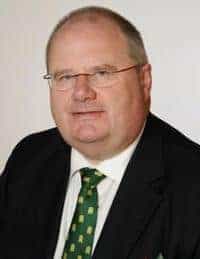
Audit should remain to ensure taxpayers' money is properly spent, but this can be done in a competitive environment, drawing on professional audit expertise across the country
Eric Pickles
Under Mr Pickles' plans, the Commission's auditing team will be moved into the private sector, where it will have to compete with other accounting firms to be chosen by local authorities to carry out an independent audit of their services in areas such as waste and recycling.
Currently, the Audit Commission is responsible for identifying local authority service areas that require an inspection and for appointing an auditor to carry it out, although the body's move to a more targeted approach has seen it significantly reduce the number of inspections covering waste services it has carried out in recent years.
Explaining why he thought the change was needed, Mr Pickles said: “The corporate centre of the Audit Commission has lost its way. Rather than being a watchdog that champions taxpayers' interests, it has become the creature of the Whitehall state.”
“We need to redress this balance. Audit should remain to ensure taxpayers' money is properly spent, but this can be done in a competitive environment, drawing on professional audit expertise across the country,” he added
A spokeswoman for the department of communities and local government (CLG) claimed that the changes would not stop councils from being subject to “robust auditing” stressing that: “Protections will be developed to ensure independence, competence and quality, including audit quality regulated within a statutory framework.”
She explained that this would be overseen by the central government watchdog the National Audit Office, which could then report to Parliament on the quality of audits.
And, she claimed that to ensure the auditors reports were focused on local bodies and local people, the government would work with both auditors and the bodies being audited “to ensure consistent formats that assist in reporting the findings to local people”.
Private sector
The Commission's in-house audit practice is the fifth largest in the county and the body has revealed that it has already been sounding out potential purchasers for this aspect of its operations.
Mr Pickles claimed that, by moving the decision on who runs a council's audit into the open market, it would cut costs for local authorities by encouraging competition between audit firms, while the overall abolition of the body would save taxpayers £50 million.
And, by ending the Commission's research activities – which have seen it publish reports on issues including waste disposal (see letsrecycle.com story) – Mr Pickles claimed he would end duplication with other bodies and strengthen the NAO's role in that area.
CAA
The proposed abolition comes alongside plans announced in June 2010 to abolish the Comprehensive Area Assessment system that involves the Audit Commission critically evaluating local authority performance against National Indicators – including three for waste (see letsrecycle.com story ).
CLG has now said that it will work with the Commission, local government and the accountancy progression to develop the “detailed design” of the successor to the Audit Commission-led system of inspections and audits, with the aim of bringing forward legislation needed for this in this Parliamentary session and having the new system in place for 2012/13.

Register for free to comment