


If given the go ahead by Parliament in Westminster, it could see the Assembly's Labour government setting tougher new statutory recycling targets for the Principality's 22 local authorities.

The LCO will give us the power to build upon our rapid switch to greater recycling levels
Jane Davidson
And, with a review of Wales' 2002 waste strategy expected to take place this year, the new powers could see the Assembly able to set new household charging regimes as well as measures to cut packaging waste – including a possible ban on plastic bags.
Waste is already a devolved issue in which the Welsh Assembly has powers to set certain legislation. However, the Assembly does not have tax-raising powers, and therefore changes would be needed if any form of “pay as you throw” system was to be brought in, or measures like a plastic bag levy.
A debate on Tuesday saw minister for sustainability and rural development Jane Davidson laying out her thoughts on the new powers being sought through a Legislative Competence Order (LCO).
Ms Davidson explained that the powers would mean Wales would be able to pass its own legislation on environmental protection and in particular waste management “based on Welsh priorities, to our Welsh timescales and in our Welsh context.”
She told fellow Assembly members: “We are confident that the 25% recycling target for 2006-07 has been met. Local authorities are to be commended for their efforts. We now need to move to 40%, and potentially beyond, over the coming years. The LCO will give us the power to build upon our rapid switch to greater recycling levels and to assist us in meeting stringent EU Directive targets.”
Recycling targets
Local authorities in Wales are currently pushing for a 40% recycling and composting target for household waste by 2010, under the 2002 strategy entitled “Wise about Waste: The National Waste Strategy for Wales”.
But Ms Davidson said the first five-yearly review of the strategy should see Wales “revising our targets upwards.” She also suggested the need for better regional partnerships on waste management.
The minister said: “Wales will face huge infraction penalties if we do not find alternative methods of disposing of waste. It is important that we work with local authorities as a large group rather than as individual authorities in order to ensure that everyone understands the requirements of them and are able to meet European targets. That is why I am looking forward to setting statutory targets.”
Perhaps curiously, Plaid Cymru Assembly Member Alun Ffred Jones said he did not believe new powers were needed to deal with recycling targets.
The Welsh nationalist said: “One mistake made over the last few years has been to allow 22 local authorities to devise 22 different strategies, without adequate guidance. That has led to unnecessary complications and quite substantial financial waste, as 22 authorities try to devise ways of increasing their recycling rates. I believe that more guidance in this respect would be of great assistance in increasing recycling rates in some authorities and in avoiding some mistakes. However, I do not believe that that is necessarily relevant to this Order.”
Household charging
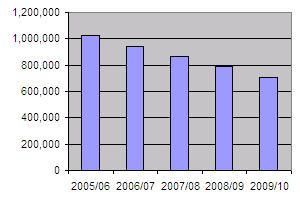
She said: “Some other European countries have found, when they have gone down the route of charging for household waste, that it significantly increases the effectiveness of recycling schemes. That is one example of incentivisation. In some countries, people who recycle are not charged for their other waste. There are all sorts of schemes out there, and we need to evaluate them for our review of the waste strategy.”
The minister also noted the need to tackle the short-term fly-tipping problems that might arise if there is a move towards household waste charging schemes.
Plastic bags
Another issue close to the hearts of Assembly members was the perception that too much packaging is being used on products, which ends up in the household bin.
Ms Davidson spoke of the need to re-consider packaging waste targets, possibly using the “German model” of requiring retailers to host recycling bins for shoppers to deposit waste packaging.
She also spoke of the need to tackle plastic carrier bags. The minister said: “United Kingdom retailers have already agreed to reduce the environmental impact of plastic bags by 25% by the end of 2008; we will see. We may want to do much more, and this Assembly is the right body to decide in the future, after this legislative competence Order has gone through its process, whether or not we would want to bring forward a Measure in this regard.”
Ms Davidson added: “Issues around a levy on plastic bags could be considered, just as Carwyn Jones's previous proposition that we might wish to ban plastic bags in Wales could be considered.”

Register for free to comment