

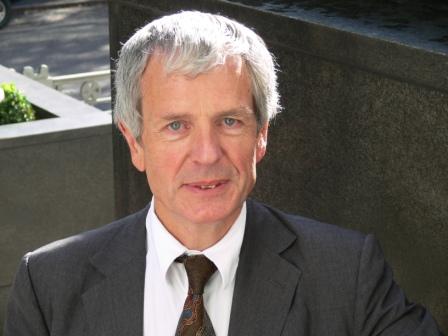

We're certainly finding that being green is good for business
Colin Drummond, Viridor
Preliminary results for the last financial year show that Taunton-based Viridor's pre-tax profits rose from £39.9 million in 2008/09 to £55.1 million last year and its profits before the deduction of interest, tax and amortisation of intangibles (PBITA) rose by £9.6 million, or 15.1%, from £63.5 million in 2008/09 to £73.1 million in 2009/10.
Of this increase, the amount contributed by its joint ventures – the Lakeside energy-from-waste plant it jointly runs with Grundon and the Greater Manchester waste PFI contract it holds with Laing Investments – increased from £1.4 million in 2008/09 to £4.2 million last year.
The impact of the company's acquisitions over the past year was made clear by the fact that, alongside the Greater Manchester deal, the purchase of London Recycling in June 2009 (see letsrecycle.com story) and Intercontinental Recycling in July 2009 (see letsrecycle.com story) contributed £89.7 million of the £98.5 million, or 18.7% growth in Viridor's revenue, taking it to £626.5 million.
This was alluded to by Ken Harvey, chairman of Pennon Group, who said: “Viridor has once again delivered a very strong financial performance. The Greater Manchester waste PFI contract, Lakeside energy-from-waste project and the latest acquisitions are further major steps forward in the successful evolution of Viridor.”
His sentiments were echoed by Viridor's chief executive Colin Drummond who, speaking to letsrecycle.com this morning (May 25) said: “Our growth rate since 2000 has been 22% so we're certainly finding that being green is good for business.”
Landfill
However, as with the company's results for 2008/09 (see letsrecycle.com story), Viridor saw a drop in landfill volumes. Of a 0.7 million tonne, or 15% fall, to 3.9 million tonnes, the company said: “The underlying decrease of 0.5m tonnes if believed to be primarily due to recession related reductions in third party industrial and commercial volumes.”
Despite this, it also noted that average revenue per tonne of waste landfill rose by 1.1% to £22 per tonne, while average gate fees increased by 3.1%.
And, the results also highlight the input of the company's non-landfill waste and recycling operations, with 44% of Viridor's profits coming from “recovering value in waste”.
In particular, the company cited “very strong” recyclate prices, explaining that recycling revenues per tonne in 2009/10 were back to the peak levels seen in the first half of 2008/09, while it also increased the volumes of recyclate it traded by 3.5% to just over 1.4 million tonnes.
And, Mr Drummond claimed that the company's recycling activities “more than make up” for the loss of landfill volumes, adding that “we actually make much more from recycling than landfill”.
Power generation
The company also stressed its increased landfill gas power generation output, which rose by 10% to 555 Gigawatt hours, and also saw average revenues per Megawatt hour (MWh) increase by 21%, from £74 per MWh in 2008/09 to £90 per MWh in 2009/10.
As of March 31 2010, the company said, its operational landfill gas power generation capacity was 100 Megawatts, of which 63% was eligible for the ROCs subsidy and 37% for the Non Fossil Fuel Obligation.
Mr Drummond highlighted the fact that the company has sold its ROC-eligible landfill gas energy at “excellent prices” in 2008 for the period until March 2010, but noted that, with prices currently £30 MWh lower than this “current market prices aren't as good as that”, and, as a result it would impact on results from that aspect of its business for the current year.
But, he remained positive, explaining that: “The year we have just started will be impacted by ROC-able output being £30 per MWh lower but I couldn't think of a better business to be in.”
The results also highlighted the other renewable energy developments Viridor is involved in – such as the Lakeside EfW, the Ineos Chlor CHP plant, AD facilities and Bolton EfW within the Greater Manchester PFI and the Exeter EfW – and concluded that “Viridor sees huge potential for increased energy generation from waste”.
The company reiterated its belief that, while energy recovery from waste currently equates to 1.5% of total UK electricity production, it could account for 6% by 2015, and has called for the government to actually set this as a target.
Looking at the potential for that to happen under the coalition government, Mr Drummond said: “On the energy front we have seen some positive statements as far as anaerobic digestion is concerned but I'm calling on the government to set a 6% target by 2015 including all technologies.”
He added: “The waste industry is ready to do that, lets get energy and waste, DECC and Defra, talking together.”
Pennon
Viridor's growth contributed to a 14.2% increase in parent company Pennon's pre-tax profits – up from £159.4 million in 2008/09 to £183.8 million in 2009/10 and, as a result, Pennon recommended the final divided per share be increased by 9.5pence to 15.6pence.
It also announced a policy of 4% real dividend increases from the current financial year until 2014/15, helping to increase its share price by 11.5 pence, or 2.35%, to 501 pence a share in morning trading, while the FTSE 100 as a whole was down 2.91%.


Register for free to comment