
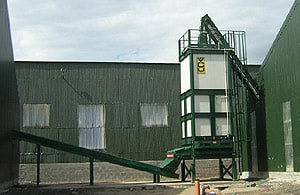
Waste management company Munro Construction Ltd has installed a small vertical composting unit (VCU) at their materials recycling facility at Evanton, 18 miles north of Inverness.
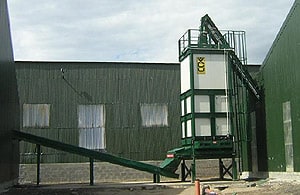 Its modular nature means Munro Construction's new VCU composting facility could be expanded |
With technology provided by VCU Europa, the facility will process waste from local commercial businesses that contains animal-derived material, in accordance with Animal By-product Regulations.
Under the rules, animal-derived waste must be heated through biological action to at least 70 degrees Centigrade for one hour, before it is no longer deemed a threat to animal health.
The new VCU system heats waste to up to 80 degrees in vertical chambers, where material is kept for around a week.
“Proven”
Billy Munro, managing director of Munro Construction, said: “We chose the VCU in-vessel composting system as our preferred technology for its proven track record in animal by-product processing. Other factors which weighed in its favour were its totally enclosed construction which ensures complete odour control, and its modularity which allows phased expansion as the site develops.”
The VCU system, installed over the last few months, could expand to include more units to deal with more catering waste from the region.
Mr Munro said: “Until now there have been no facilities available in the region to take in meat inclusive catering waste, catering waste and animal by-products from the local fish and food industries. Since the introduction of the Animal By-product Regulations, local ABP has had to be transported hundreds of miles, even to England, for processing.”
Clearance
Munro's site has received clearance from the state veterinary service to handle animal by-products, and has started operations.
Peter Hallam, VCU Europa's project development manager, said: “We look forward to working with Munro's to ensure that our reputation as leaders in the field of animal by-product processing is maintained.”
The Animal By-Products rules were brought into the UK following the foot and mouth farming crisis of 2001. They are intended to put tight controls on the disposal of all animal by-products for the sake of public health, especially operations such as composting which see the end product spread on open land.

Register for free to comment