

And, Veolia has applied for the plant’s maximum permitted throughput to be reduced from the 75,000 tonnes per annum allowable under the standard rules permit to 50,000 tonnes per annum based on the actual and projected future throughput.
The development comes as the company looks to expand its plastics processing capacity, with investment at Dagenham and separate plans for a PET processing plant.
The Dagenham permit variation has been put out for consultation by the Environment Agency.
A Veolia spokesperson told letsrecycle.com: “The permit change is a bit misleading – we are just regularising the existing permit.
“We are actually expanding operations and investing in more plastic processing at the site, as well as other major projects around the UK in preparation for the R&W strategy from DEFRA.”
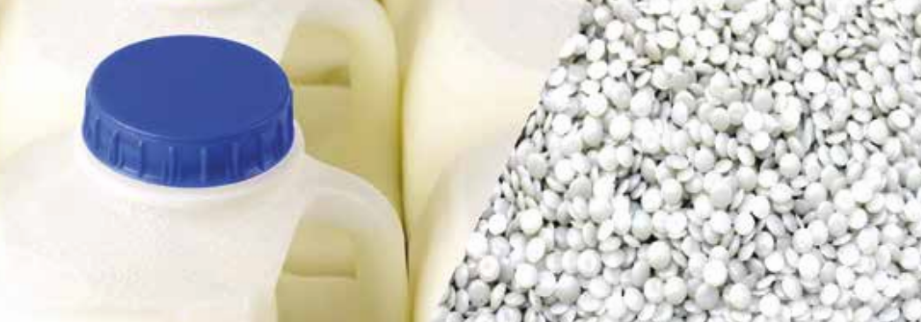
Currently, the plant’s main feedstock is high density polythene (HDPE) milk bottles. Veolia says HDPE bottles make up 25% of the plastic it collects in the UK.
However, in applying for a bespoke permit for Dagenham the company explains that it will help it handle other materials for recycling.
Process
The recycled HDPE from the Dagenham facility, which Veolia acquired from Closed Loop in June 2018, is used in a range of products, including laundry bottles, drinks bottles, cosmetic bottles and milk bottles.
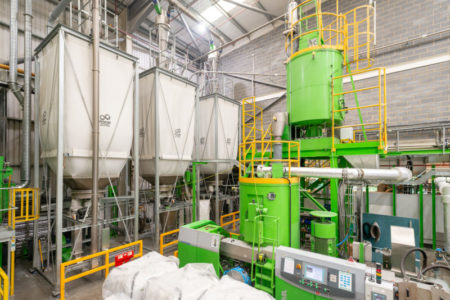
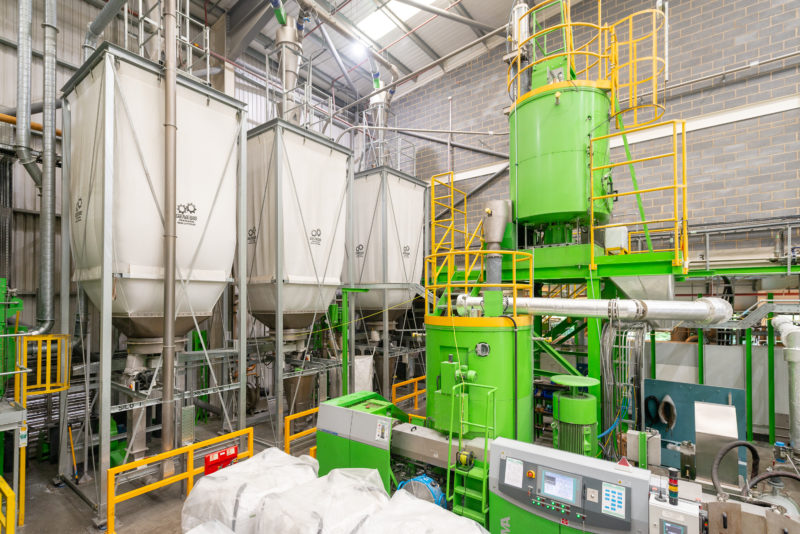
At the plant, plastic is sorted and processed by three vacuum extrusion lines.
The five-stage process involves hot washing, colour sorting, vacuum decontamination, melt friction and extrusion into pellets.
The pellets then undergo testing to ensure each meets quality standards for food packaging.
HDPE
Veolia officially reopened the plastic milk bottle reprocessing plant in Dagenham in September 2019, with the company saying it would produce around 10,000 tonnes of high-quality food grade HDPE pellets annually (see letsrecycle.com story).
Now, the Dagenham plant is supplied with HDPE from Veolia’s plastics sorting facility in Rainham, Essex (see letsrecycle.com story).
Investment
In May 2019 Veolia invested more than £1 million in the facility (see letsrecycle.com story).
The investment, which included installation of a granulator and processing kit and an upgraded washing process, increased the total food-grade recycled HDPE production capacity of the facility by 20% to 12,000 tonnes per year.

Subscribe for free