

The new throughput figure represents a 10% increase on past rates and as well as increasing throughput, the company said that changes to the MRF mean that it can also enhance quality.
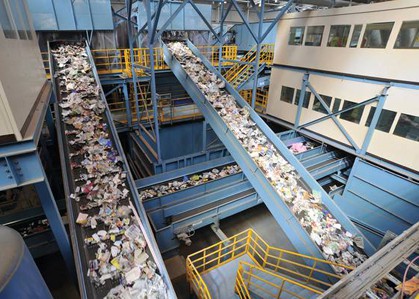
UPM Shotton built its MRF alongside its newsprint production mill in North Wales. It secures a significant portion of its feedstock (used newspapers and magazines) from the MRF. And, there has also been an investment at the mill following the closure of one its paper production machines last year to make better use of steam generated from its biomass plant.
Upgrade
The upgrade work for the MRF has included improvements to the sorting screens and infra-red optical sorting systems. The company claimed this “has enabled UPM Shotton to create additional capacity without compromising quality of output materials.”
Training has also been targeted by UPM. Alongside the mechanical and optical improvement works, further training of manual pickers was carried out with the aim of “firmly embedding” UPM’s ‘Total Production Maintenance’ ethos “expected of a fully aligned paper mill processing unit”.
Simon Walker, head of recovered paper sourcing said: “We are delighted to have completed this improvement in a timely and controlled manner, such that there was no interruption to our regular suppliers.
“It naturally follows that UPM is now seeking further sources of commingled materials with or without glass to make best use of the MRF capacity improvement.”
Biomass
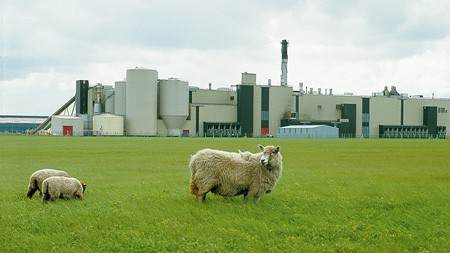
Despite the loss of one machine at the mill, there has been additional investment on the energy side. UPM closed down its paper machine one (PM1) at Shotton at the beginning of 2015. Prior to the closure of Shotton PM1, all of the excess low pressure steam generated as a by-product of electrical power generation was used as heat in the paper mill.
So, a new condensing turbine power plant has been installed to use steam which had become surplus to requirements.
“Following the closure, we can no longer use all of this steam, which consequently is cooled and vented to the atmosphere. The new condensing turbine power plant will use this excess steam and generate electrical power,” says mill manager David Ingham to explain the improvements.
The new plant will generate approximately 4.8 MW of renewable energy from waste steam. Thanks to the condensing turbine, the share of biomass energy production will increase to 70%. The current share of biomass energy production from a total electrical power demand is 56%. The new plant will be producing power by early 2017 at the latest.
“The new power plant will significantly reduce the cost of energy consumed in the recycled paper mill. This will underpin UPM Shotton’s status as a low cost manufacturer that is able to sustain its competitiveness going forwards.”
“Our cost base has reduced significantly and below the target levels we set before the closure process began,” emphasises Ingham.
UPM noted that: “The development of renewable and recycling technologies and practices represents one of the corner stones for the future competitive advantage of the Shotton mill.”
Related links
UPM Shotton

Register for free to comment