


The UK's largest plastics sorting and recycling company has today (December 21) changed its name in a bid to mark a ‘new chapter' of growth in its business.
AWS Eco Plastics, which operates a 100,000 tonne-a-year capacity plastics sorting and recycling facility at Hemswell in Lincolnshire, has been rebranded ECO Plastics.
By the middle of 2011 the management team expects the plant will process 140,000 tonnes of waste plastic a year, almost half of the UK's national total plastics sorting capacity today.
Peter Gangsted, chairman of AWS, said: “This announcement is a reflection of the progress that we have made in establishing ECO Plastics as the European market leader over the last five years. But it's also a statement of intent. Having recently reopened our plant, we're now already looking at expansion plans that will make us a world leader.”
Mixed
Feedstock for the Hemswell facility largely consists of mixed plastics which come from a wide range of waste collectors and sorters across the UK, such as WRG. Mr Gangsted said that some pre-sorted bottles were imported from Europe but insisted this was a temporary measure and constituted only a “small part” of what the company did.
He claimed that despite competition in the market for bottles, there was still more material around than capacity available. According to the latest Recoup survey, there were 303,412 tonnes of household plastic packaging collected in 2009 – just three times the capacity of the Hemswell plant – but Mr Gangsted said this figure was growing.
He said: “We are able to fill our plant which is why we are expanding it. But we do want to ensure that UK material is retained in the UK.”
Once at the plant, the mixed plastics are cleaned and sorted using state-of-the-art Stadler, TITECH and Herbold machinery into 11 different streams. All of these – including HDPE milk bottles – are baled and sent to other companies for reprocessing with the exception of PET bottles, which are reprocessed on site.
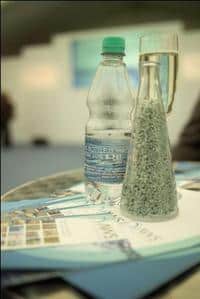
The PET is shredded and undergoes ‘super cleaning' with microbes to ensure it is up to the high standards required for food-grade material, before being sold for use in the manufacture of new bottles and plastic packaging. At the moment the company produces 15,000 tonnes of rPET a year.
As the plant only re-opened recently, Mr Gangsted said that it was only operating at 75% efficiency but that PET accounted for about a third of the material which came in.
Mr Gangsted said that demand among beverage manufacturers for recycled PET had soared recently as they looked to make their packaging more sustainable.
Independent research has shown that products made with recycled plastic are 68% less carbon-intensive than those made with virgin materials.
Mr Gangsted said: “Nobody else has the sorting technology we have and a key part of producing food grade PET is to sort the material properly. Once we have got to 140,000 food grade we will have 90% of the current capacity in the UK”.

Register for free to comment