


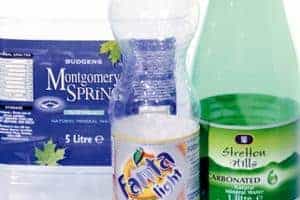
However, the study – entitled ‘Compelling facts about plastic 2008' – found that the growth in UK plastics recycling had been slower than the “considerable increases” seen in previous years, representing only a 1% rise from the 17% achieved in 2007 after achieving over a 2% increase from 2006.
This echoes the findings of a Recoup household plastic packaging collection survey published late last month, which found that while the tonnage of plastic bottles recycled in the UK grew from 181,887 tonnes in 2007 to 216,067 tonnes in 2008, the growth of 18% was considerably less than the 68% increase experienced between 2006 and 2007 (see letsrecycle.com story).
Highlighting an alarming dependence on landfill, PlasticsEurope also claimed the UK had also landfilled around 2.6 million tonnes of plastic packaging. This is roughly 75% of post-consumer plastic waste in the UK and represents a significant proportion of the 12.1 million tonnes of plastic packaging landfilled across Europe.
The publication of the UK figures, which were compiled from official statistics released by European and national authorities and waste management firms, came as the European plastic industry said it was experiencing the first slowdown in production for 34 years.
The report highlighted that, despite this the Europe-wide plastics recycling rate rose from to 20.4% in 2007 to 21.3% in 2008, which was an improvement on the growth of 0.7% between 2006 and 2007. Meanwhile, 30% of plastic packaging was sent for energy recovery compared to 29.2% in both of the previous years.
Concern
Assessing the UK's performance, PlasticsEurope voiced concern that, even with the “positive momentum” of a slowly increasing recycling rate, the sector could face difficulty in the coming year due to the impact of the economic crisis.
The plastics recycling sector was among the worst affected by the slump in the market for recyclable material at the end of 2008 – which saw material stockpiled and prices paid for recovered plastic material plummet (see letsrecycle.com story).
Jan-Erik Johansson, regional director at PlasticsEurope, said: “It has been rewarding to see all efforts to increase plastics packaging recycling over the years. The industry, local and national governments, NGOs, Retailers and consumers have all played major roles.”
“Bridging over the difficult times caused by the crisis will need everyone's contribution. We continue to strongly believe in plastics recycling and its contribution to society. We are counting on UK decision-makers to demonstrate the same commitment,” he added.
Despite the slowdown, Mr Johansson said that the UK was still capable of achieving its goal under the ‘Plastics 2020 Challenge' recycling campaign to recycle 50% of plastic packaging by 2020 (see letsrecycle.com story).
Councils
Commenting on the current situation facing the plastics recycling sector, Andrew Craig, principal policy officer at the Local Authority Community Advisory Committee (LARAC) and board member of Recoup, explained that budgetary constraints could have prevented a number of councils from extending existing kerbside schemes to include plastics.
He told letsrecycle.com: “I think there are a number of reasons why this may be the case. The government has reduced the drivers to stimulate recycling and while a local authority may have a recycling target it depends on whether its local strategy partnership decides whether recycling is one of its targets.”
Mr Craig also said that LARAC was keen for there to be greater investment in domestic plastic recycling infrastructure to improve the recycling rate further.
Confident
Others have expressed a more confident outlook for the plastic sector. Chris Dow, managing director of Closed Loop Recycling, told letsrecycle.com that he was happy with the increase in bottle recycling shown in the Recoup report but was not surprised it was restrained by the recession.
He said: “The 39% [bottle recycling] rate is definitely heading in the right direction, we had 182,000 tonnes in 2007, which was 34%, and I am very happy. In 2008 we had a big blip towards the end of the year – the ‘great recycling disaster of 2008' – and that probably would have had some impact.
“At present I am very happy because I am sure we think it would have had a majorly big impact,” added Mr Dow.
HDPE
Plastics packaging firm Nampak highlighted the Recoup finding that approximately 57% of HDPE milk bottles consumed and collected in the UK during 2008 were recycled – which it said was an increase of 9% on the previous year's figures.
The firm claimed the figure was “excellent news” and in-line with targets set by the Defra-led Milk Roadmap to increasing the quantities of recycled HDPE in milk bottles by 2020, aiming for half of all milk packaging to be made from recycled materials.
James Crick, business development director at Nampak, said: “It is imperative that this upward trend in HDPE milk bottle recycling continues in order for the Dairy Industry to reach its packaging goals. We applaud all those involved in the collection, sorting and reprocessing of HDPE for the efforts they have made to reach this landmark figure.”

Register for free to comment