

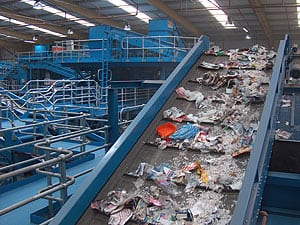
Produced this month, the report calls for increased stimulation of innovation in the waste sector and is the culmination of a one-year investigation by the research institute.
It draws on insights from 80 stakeholders from across the entire waste supply chain, with participants including WRAP, Viridor, Eunomia, Andigestion, Zero Waste Scotland and Innovate UK.
Potential
According to the investigation, the response from industry stakeholders indicated there is huge economic potential as industrial waste can be used to produce high value chemicals, materials and products.
The report says: “KTN examined the full waste valorisation supply chain from the point of generation to manufacture into new products. Industrial and commercial processes generate a complex array of different waste streams, most of which do have potential to be exploited differently in order to capture additional value.”
The UK waste sector is valued at over £11 billion and is already evolving as industry and society come to understand waste as a resource, the study claims, but innovation is needed to economically recover valuable materials from waste as well as to keep up with its changing composition.
Innovation
The report identifies a number of opportunities that can be exploited by UK companies, recommending ideas for new technology and processes to “help the UK continue to benefit as the waste sector evolves.”
Findings are discussed against four sector groups; infrastructure systems, manufacturing reprocessing and materials, emerging and enabling technologies, and health, agri-food and life sciences.
Recommendations for innovation in the manufacturing, reprocessing and materials section include the development of “technologies today for reprocessing and remanufacturing the waste streams of tomorrow” and the introduction of “redistributed/localised waste processing” to minimise the transport of waste and “allow individual consumers or communities to be responsible for and exploit the benefits of their waste”.
The report also concludes that more innovative collection schemes are required to get products and materials back for reprocessing or remanufacture.
Financing
Commenting on the UK’s potential for technical and commercial innovation in waste valorisation, the report says: “Particularly when developing technologies to treat waste streams of the future, there is potential for the UK to gain first-mover advantage, taking novel processes to market and capturing a share of a nascent infrastructure.
“In order for the UK to capitalise on the opportunities for growth through the development of new processes, technologies and services, public and private financing for innovation will need to be stimulated.”
However, “any public or private financing for waste valorisation needs to bear in mind the prioritisation provided by the waste hierarchy,” the report adds. “The greatest economic and environmental benefits can be achieved through improved resource efficiency in production processes or keeping products in productive use for longer.”
KTN is an innovation network that brings together businesses, entrepreneurs, academics and funders to develop new products, processes and services.

Register for free to comment