
ReCon Waste Management, which is based at Portadown in County Armagh, started researching ways to recycle the organic fraction of street sweepings in 2012 after the Environment Agency deemed them to be an unsuitable input to PAS100 compost. This meant it could not be counted towards council recycling rates.
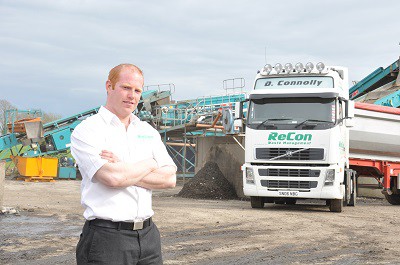
And, after developing a technique through which the material could be turned into a topsoil conditioner, the company achieved End of Waste Status in July 2014 from the Northern Ireland Environment Agency (NIEA). This means that once the material reaches a certain standard, it can be classed as a product and deemed recycled.
A spokeswoman for NIEA said: “NIEA received an End of Waste submission from ReCon Waste Management Limited, which related to the production of a blended multi-purpose topsoil. On the 24th July 2014, NIEA determined that End of Waste criteria had been met for a blended multi-purpose topsoil, to be used specifically for the improvement of agricultural land.”
Local authorities
ReCon, which claims that this is the first End of Waste protocol of its kind for this material in Europe, said that since achieving End of Waste status it has taken on an additional four local authority customers and a number of private contractors.
It currently processes street sweepings for: Armagh city, Banbridge and Craigavon borough council; Fermanagh and Omagh district council; Mid Ulster district council; Derry city and Strabane district council; and, Causeway Coast and Glens borough council.
The company also has the contract for processing street sweeping waste from all of the DRD Roads Service depots in Northern Ireland which it says “accounts for the majority of the waste stream in this province”. It also take street sweeping waste from six other private contractors.
In total, ReCon handles 15,000 tonnes of material per annum at its custom-built plant.
ReCon managing director, Daniel Connolly, said: “Soon after starting to process this waste stream we found that sending the organic fraction to landfill was not a sustainable or commercially viable option. Through continued research and development we were able to achieve End of Waste status on the material allowing it to be recycled. This is great news for the circular economy as the soil produced will be used locally for agricultural improvement. The protocol will help ease the burden on local councils as they look for innovative ways to achieve recycling targets.”
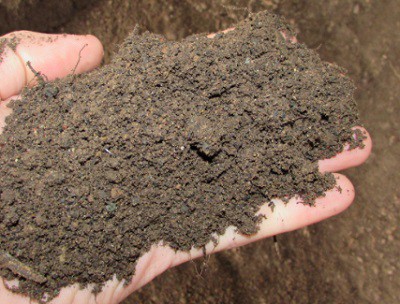
According to ReCon, street sweepings and gully emptyings account for up to 8% of the waste stream handled by local authorities and therefore, by recycling them, the company can add almost 8% to local authority recycling rates.
Process
The recycling process sees waste washed before aggregates are extracted from the litter and organic fractions and sent for use in the manufacture of concrete and drainage applications. The litter is then sorted into bottles and cans, baled and sent for recycling. A small percentage – less than 1%, including items such as crisp packets – is sent for use as refuse-derived fuel. According to ReCon, this part of the process, which sees around 80% of material recycled, is similar to that in operation at other street sweepings plants in the UK.
However the second part of the process– which ReCon says is more innovative – sees the organic fraction screened to remove physical contaminants and analysed against the parameters of the End of Waste protocol. Provided the batch is suitable for use, it is then blended with other materials to produce a multi-purpose topsoil which is used by local farmers. The company said it would not divulge the exact details of how this is achieved due to commercial confidentiality.
ReCon said that it charges local authority customers for the service but that it was “significantly” less than sending the material to landfill.
In a statement, the company has said: “Increased recycling percentages allows us to score a lot higher in public tenders where quality accounts for a lot of the allocated marks. Local authority customers have stated that the increase in recycling rates in a great help towards their recycling targets.”

Register for free to comment