


The strategy consultation, in which Defra put forward a supportive view of energy-from-waste (see letsrecycle.com story), has fuelled a major debate on the use of incineration in the UK.
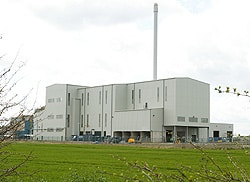
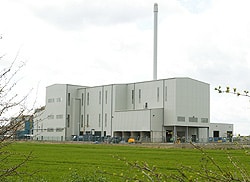 Debate over whether to use incinerators, such as this plant in Lincolnshire, has been stirred up by Defra's waste strategy consultation |
Industry groups including the CIWM have welcomed the government's views on energy-from-waste, calling for an expanding role for incineration.
Incineration currently accounts for about 9% of municipal waste in the UK but could grow according to Defra such that it deals with as much as 27% of municipal waste by 2020.
In its initial reaction to the strategy consultation, awareness-raising and market development organisation Waste and Resources Action Programme (WRAP) welcomed moves to strengthen waste minimisation work, but warned that the UK must not lose focus on recycling.
Progress
Jennie Price, WRAP chief executive, said: “The UK has made significant progress by almost doubling household waste recycling in the last four years. But comparisons with many of our European neighbours show that the task is far from finished.”
Industry regulators the Environment Agency called for “better ways” of reducing the amount of waste produced in the UK. It is particularly highlighting the need for simplified legislation, action on waste crime, reduction targets for waste going to landfill. It is also advocating more producer responsibility – in a voluntary capacity – to help business cut the amount it spends on waste management.
The Agency's head of waste strategy, Martin Brocklehurst, said: “As a society we have also been producing more waste – it has been growing by 3% year on year since 1997. This strategy makes clear that as a nation we must change our behaviour. We need to see an end to our throw away society and produce less waste in the first place. We also need to take on the challenge of recovering and recycling our waste into resources which will benefit us all.”
Local authorities
The local government sector has welcomed the government's proposals for increasing recycling targets, provided that sufficient funding and support is made available for councils to meet the requirements.
Cllr David Sparks, who chairs the LGA's environment board, called the proposed 40% national household waste recycling target for 2010 a “huge step in the right direction”. He suggested the setting up of a new programme for councils to share recycling know-how.
Welcoming the wider role of local authorities working with businesses to increase the recycling of non-household waste, the LGA said councils were ideally placed to help with non-municipal waste management.
Cllr Sparks said: “Councils have led the way, including setting up recycling schemes for local shops and offices, and are ideally placed to develop and implement strategies for widescale improvement.”
Waste industry
The waste management industry's trade association, the Environmental Services Association, said the key test of the review would be whether it would provide a “clear roadmap to European levels of recycling and recovery”. The Association warned that the government's delivery of European waste targets is “still not on track to be fulfilled”.
ESA chief executive Dirk Hazell said: “Under the Labour government, recycling has trebled and this is a significant achievement. However, the UK needs still to extract even more value from waste and the government needs to set out a clear roadmap enabling this to be done.”
Members of the waste industry have also particularly welcomed the government's recognition of the role of energy-from-waste in diverting material from landfill. Waste firm Waste Recycling Group said the government was “right to point to an expanding role for EfW in the UK” and called on Defra to provide “strong central leadership” to help councils and waste companies establish new waste treatment infrastructure.
Continued on page 2


Register for free to comment