

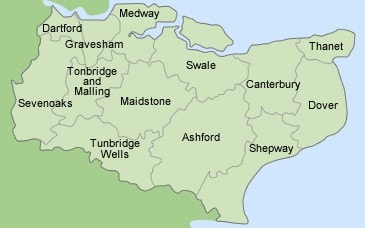
Kent county council planners are experiencing stiff resistance from district planning officers over the allocation of suitable sites for future recycling and waste treatment facilities, according to members of the South East Waste Planning Authority Group (SEWPAG).
As landfill tax rises each year, there is increasing pressure on local authorities to divert more waste from landfill. As a result, Kent county council planning officers are working on a plan to allocate industrial sites in the county to develop future waste management facilities.
Mr Prosser said that resistance from district planners to sites in their area being used for waste management facilities was due to the low intensity of employment at these developments.
As a result, some district planners have been resistant to large waste management developments on industrial estates as they may not provide as many employment opportunities as other developments.
He also said some district planners felt industrial estates housing waste management facilities could be seen as unattractive areas for businesses in other sectors to start developments.
They [district planners] do see it as being difficult in terms of whether they want to get another waste site on the estate. It might make it harder to get other businesses to use the estate. The low intensity of employment at waste management facilities also makes it a bit difficult, he said.
‘There is a history of tension between upper tier planning authorities like counties and districts on strategic issues like waste management.’
Rob Murfin, Planning Officers Society
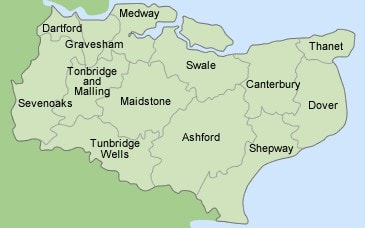
He added: We have gone to five districts in detail with sites for possible developments, but only one has come back saying that an industrial area was suitable for waste sites. He declined to say which districts these were.
However, Mr Prosser said that planning officers at both district and county level in Kent were all well aware of the need for new waste management facilities in the county and are working towards this aim.
The situation was highlighted at the latest SEWPAG meeting on January 31 2013, in which it was noted that the Kent county council planning officers were Finding stiff resistance from district planning policy officers to identification of appropriate industrial estates for unallocated future waste management developments.
Mr Prosser said that the likely date for the completion of a draft of the minerals waste local plan, which will include allocated sites in the county for possible waste management developments, would be around January 2014.
Commenting on the differences that can be encountered between counties and districts over waste management sites, a district planning officer in Kent told letsrecycle.com: All these sites are assessed in the same way, really. Unless there is an absolute need for something in a specific location then the council might have to be more lenient.
But I do not see any massive problem. You will get issues like that quite often it is politics. It is the way it is, but we do work quite closely with the county council and were often in meetings together.
However, he said that if a site was suitable for a recycling development then it would be difficult for district planners to disagree with a countys allocation.
There is the realisation at district level that there are these needs, as there are more houses being built in the county, so we need more recycling facilities you cannot just say no to everything. If the site takes ticks the boxes it is very hard to turn it down if it is on a good site and it is not detrimental to residential areas, for instance.
History of tension
Writing on letsrecycle.com Rob Murfin, Planning Officers Society director and head of planning at Derbyshire county council, there is a history of tension between upper tier planning authorities like counties and districts on strategic issues like waste management.
However, he added that it was also perfectly rational for districts to state that certain business parks/industrial estates are being made the focus for high quality inward investment developments (see letsrecycle.com opinion).
Peter Day, another member of the Planning Officers Society and minerals and waste policy team leader at Oxfordshire county council, said that developing waste management sites took time but that differences of opinion between district and council planners was not a problem.
Clearly there will be differences of view, he said. But my own experience is that this can be resolved. We [planning officers] have to consider all possibilities and come to a balanced view.
It does take time to develop sites for treating waste from landfill and within that there are officers with competing views. But district planning officers are well aware of the need for new facilities in principle there is not any disagreement between authorities. It is not an issue.
Mr Murfin said that the best way forward was to visit district planners and politicians to ask them to say which business parks are suitable for different levels of waste management.
We have found that by following this process even districts who started off by saying we have no sites suitable come round to the positive way of thinking, he said.


Register for free to comment