

This represents the first time that South Oxfordshire has finished top of the table, having come second every year since 2009. Neighbouring authority Vale of White Horse finished third with 65.27%, while Rochford finished second with a recycling and composting rate of 65.47%, having seen its recycling rate fall from 66.75% in 2012/13. Stockport was the highest ranking urban authority in England, clocking an overall recycling rate of 61.11%.
South Oxfordshire
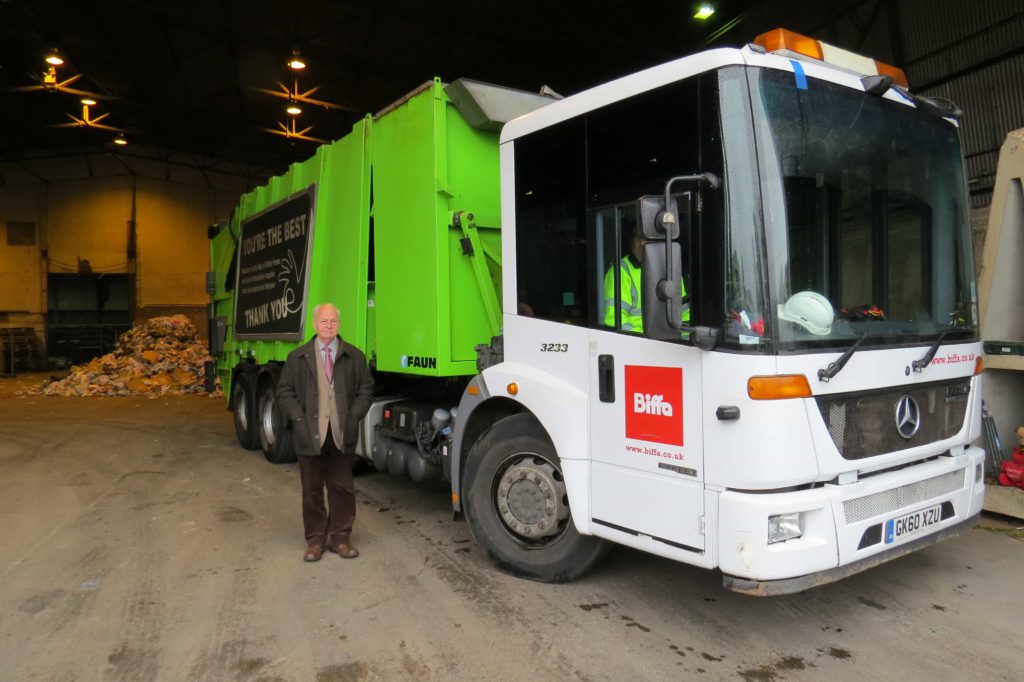
What are the secrets of South Oxfordshire’s success? From a visit to Culham in the district the volumes of commingled materials generated by the district are apparent (see also South Oxfordshire video). Biffa collection vehicles tip into a transfer station within a large hangar on a disused airfield, an ideal site for handling recyclables. The incoming stream does contain some black sacks and carrier bags. But, Cllr David Dodds, South Oxfordshire’s environment committee chairman, is clear about the reasons for success – providing residents with a simple service. Green recycling bins are collected fortnightly, food waste is collected weekly, residual waste in grey wheeled bins is collected fortnightly (on alternate weeks to recycling) and there is also chargeable fortnightly green waste collection in a brown wheeled bin.  While the authority is strict about not taking side waste it is flexible when it comes to extra recyclables, if residents put additional material in bags out when their recycling bin is full. And, Cllr Dodds also notes that the authority receives considerable amounts of food waste. Looking ahead, as he explains in the video interview, the authority is to take advantage of the fact that the authority’s residual waste will be going to the Ardley incinerator. This, he says, means that RCVs will no longer have to drive onto landfills and so new vehicles will be bought that can have cages underneath the trucks to put additional materials in for recycling, such as waste electrical items.
Ashford
This year’s results make favourable reading for Biffa – which carries out recycling collections for three of the top 10 recycling authorities – South Oxfordshire, Vale of White Horse and Stratford- on-Avon. It also collects material on behalf of the ‘most improved’ local authority – Ashford. The council, once dubbed ‘England’s worst recycler’ posted a 14% recycling and composting rate in 2011/12 – but recorded a 42% recycling rate in 2013/14, an improvement of 30% points. Biffa Municipal commercial manager Pete Dixon, commented that the firm has developed a formula to help drive local authorities up the table He said: “When a council wants to change, we have a preferred service model that has proved itself time and time again, as the Defra table shows. “Where feasible and practical, we focus on collecting refuse and dry recyclables on alternate weeks. Optimum results are achieved when the dry recyclables are collected from wheeled bins with waste food collections taking place each week. The fact that Biffa-serviced councils account for 40% of the top ten says it all.”  However, he noted that improvements become harder once a council has exceeded 60%, adding: “That’s when we must find ways of adding new materials to the recycling list, as well as giving residents more recycling options.” Other improved authorities include Aylesbury Vale, which topped 50% recycling for the first time in 2013/14, up from 38% and East Cambridgeshire, up 12% from 33% to 45%. England’s worst performing authority was found to be the London borough of Newham, which clocked a 17.6% recycling rate.



[…] Our area is now the third highest mover in recycling rates over the past year, according to this article. We’ve still a way to go before we hit the really high spots, but it shows what a difference […]