


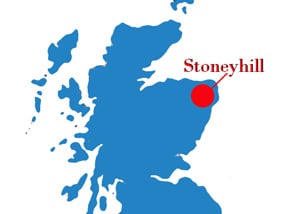
Waste management firm SITA UK has revealed plans to develop a £60 million ‘resource recovery park' in order to treat 100,000 tonnes of residual waste-a-year under its long-term waste contract with Aberdeenshire council.

The ‘resource recovery park' will include a mechanical biological treatment facility, an in-vessel composting unit and a gasification plant, which will produce electricity to be sent to the National Grid.
Development of the plant comes off the back of SITA being awarded a £200 million, 15-year contract to deliver waste and recycling services by Aberdeenshire council in July 2010 (see letsrecycle.com story).
The Scottish local authority currently produces 150,000 tonnes-a-year of household waste for recycling, with 100,000 tonnes of sent to landfill. SITA intends to use the proposed ‘resource recovery park' to reduce the amount of waste sent to landfill by 70%.
SITA UK said it intends to submit a Proposal of Application Notice (PAN) in the “next week or the week after” to Aberdeenshire council. The PAN is a requirement under Scottish planning law requiring an applicant to set out its proposal and course of public consultation before submitting a full planning application.
The company intends to hold public exhibitions on the proposal in March, ahead of submitting a full application “during the first half of the year”.
Investment
SITA UK said that the proposed development would help Aberdeenshire council to move towards complying with its stringent waste and recycling targets, as set out in the Scottish Government's Zero Waste Plan (see letsrecycle.com story).
Commenting on the impact of the ‘resource recovery park', Martin Cracknell, SITA UK's strategic development manager in Scotland, said: “The issue of how we deal with Aberdeenshire's waste is something that affects all of us and is something that must be addressed if we are to meet government targets.
“The Stoneyhill Resource Recovery Park represents an enormous amount of inward investment of approximately £60 million, with significant socio-economic benefits, including the creation of about 200 jobs during the construction phase, and a further 35 permanent jobs to operate facilities at the park.”
Mr Cracknell added that the consultation phase would be important in helping outline SITA's plans to the local community. He said: “We appreciate that people will want to get involved and will have lots of questions, so we are very much looking forward to meeting with the community in the coming weeks, where we will explain our plans in more detail.”


Register for free to comment