

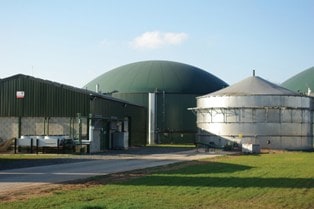
Gate fees for food waste sent to anaerobic digestion facilities have fallen significantly since early 2011, with some areas seeingprice drops ofbetween 15-25a tonne, according to operators.
A market report produced by re3, the waste partnership of Bracknell Forest borough, Reading borough and Wokingham district councils and waste contractor Waste Recycling Group, found in March 2012 that gate fees per tonne of food waste for AD and in-vessel composting facilities (IVC) had fallen by as much as 15 over the preceding 12 months, from around 50 in 2011 to 35.

The partnership is investigating gate fees with a view to possibly applying for funding from the government’s 250 million weekly waste collection fund.
In its report re3 said: The price of food waste processing has fallen quite significantly over the last year. It seems unlikely that it could fall too much further as demand and capacity will increasingly relate to one another.
Capacity
Operators of AD facilities across the UK confirmed that prices have been falling and told letsrecycle.com that a number of factors have contributed to this, most notably a growth in the number of AD facilities and an excess of AD capacity.
Harry Waters, commercial director at Oxfordshire- based organic waste processing firm Agrivert, which processes around 35,000 tonnes of waste at its Cassington AD facility, said that growth in processing capacity has lead to greater competition in the market, with operators keen to keep prices low to win contracts.
He said: If you go back two years there was very little capacity in the market, operators could charge what they liked and this reflected the risk they had taken as early movers in the market. The market has now seen downward pressure on prices as a further 20 or so plants have become operational in the last 18 months. Although it is growing swiftly there is now a balance of supply and demand which has kept gate fees at a more palatable level for the consumer.
And, Mr Waters noted that two years ago a gate fee of around 60 could be expected for a tonne of food waste, but increased competition had driven this down to between 35-45.
This suggests that predictions made in WRAPs annual Gate Fees Report in July 2011 that gate fees would continue to fall, having dropped by around 13 per tonne on average, have proved to be correct (see lestrecycle.com story).
Efficiency
Mr Watersalso commented that a number of larger scale AD facilities coming on-stream have allowed some operators to run plants more efficiently, leading to further falls in pricing still. He said: Economies of scale are critical to AD. Some of the downward movement in gate fees can be attributed to larger plants delivering operational efficiencies.
Other operators have echoed this view, commenting that the pressure for some operators to fill large capacity facilities are pulling gate fees down. One said: There is downward pressure on prices due to supermarket demands. Two large operators have built big plants and have not got the waste.
Helen Franklin, managing director of Lower Reule Bioenergy in Staffordshire, said that an influx of new facilities had seen the market become more competitive, but she did not expect it to be a long term trend. Speaking to letsrecycle.com, she said: What we are seeing is a blip, caused by lots of facilities coming online and people competing for the clients and clients looking for the cheapest offer. We have almost certainly seen gate fees come down, our facility has been affected by another plant opening nearby.
Scotland
Meanwhile in Scotland, operators have noted that prices have fallen due to local competition in the countrys central belt, although this is expected to stabilise when laws introduced by the Scottish government banning biodegradable municipal waste from being sent to landfill come into effect.
Nick Browne, who oversees organics recycling for waste management firm Biffa, which has the 120,000 AD facility at Cannock Chase, Staffordshire, the largest in the country, agreed that the market is competitive but said that there is still opportunity for growth within the sector.
He said: The market is competitive but there is still plenty of food waste and as more councils go down the road of separating out food waste we will start to see an impact on demand. The AD industry is growing, but with fewer parties than originally expected, a lot of facilities received planning permission but did not progress any further due to the recession, for those that do build there is an opportunity as there is a lot of food waste out there.
Others in the sector have speculated that prices could go down further although it is thought that the market is close to reaching a sustainable level, with demand and supply beginning to even out.
A study published by WRAP in February 2012 revealed that the number of waste-fed anaerobic digestion facilities in the UK had shot up from to just two in 2005, to 44 in 2011, (see letsrecycle.com story), with a number of facilities still in the pipeline.


Register for free to comment