


With the non-metallic components currently recycled, the DTI trials suggest about 78% of the average ELV is being recovered in the UK. Meaning there is still some way to get to the 85% target set for 2006 under Europe's ELV Directive.
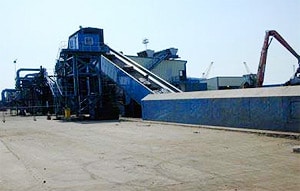 400 vehicles were shredded at Sims Group's Newport facility in the DTI trial |
The DTI shredder trials were run over the summer in order to assess the task ahead for the UK in meeting the Directive, which requires 85% of scrapped vehicles to be recovered from 2006 and 95% from 2015.
Since virtually all metals from ELVs are recovered – because of their commercial value – the EU could allow the UK to automatically assume it has achieved full recycling of the average metal content of ELVs. Making this assumption would then only require the measurement of the recovery of non-metal components of vehicles in order to reach the Directive targets.
Consultants Tony Weatherhead and David Hulse concluded: “The result of the 400-vehicle trial was that the metal recovery rate from ELVs in the UK currently stands at 75%. We understand that DTI will submit this figure, supported by the detailer research study, to the European Commission, and will therefore be concentrating its recovery performance monitoring regime upon the remaining 25% of non-metallic ELV waste necessary to achieve the overall 85% recovery target for 2006 onwards.”
“It is recognised that the 75% assumption will need to be re-assessed in future years, given the changes in vehicle compostion that will take place,” they added.
” The result of the 400-vehicle trial was that the metal recovery rate from ELVs in the UK currently stands at 75%.“
– DTI shredder trial report
Trials
Trials on 400 vehicles that were fully de-polluted to ELV Directive standards, with 367,186 tonnes of materials processed overall – an average weight of 971kg for each vehicle.
The trial found that 74.48% of the average ELV is recovered by recycling the metal content. This excluded fuel, but included lead wheel balance weights, catalytic converters (where fitted) and metal content of batteries and tyres.
The trials were carried out on behalf of the cross-sector ACORD group, using a sample of the most popular types of cars and light vans on an “as received” basis.
Depollution took place at the premises of GW & G Bridges at Crawley, Sussex over four weeks, using de-pollution equipment made by Seda. Depollution accounted for about 5.7% of the total vehicle weight. Tyres – which can no longer go to landfill from July 2006 – made up about 3.22% of the vehicle weight.
Vehicles were then baled and transported to the Sims Group shredder at Newport, Gwent. Further processing of the non-ferrous output was carried out at Sims Group's Dense Media Plant at Long Marston, Warwickshire, which separated non-ferrous metals from the non-metallic fraction.
| Related links: |
Rate
The study suggested that including non-metallic depollution fluids, tyres and other non-metallic components recovered in the process, the actual recovery rate being achieved is about 78.66%.
The study concluded that the UK should submit a figure of 75% to the European Commission as the assumed measure for metal content of ELVs in the initial reporting period from 2006. Among other EU countries, the Netherlands identified a metal content of 72.5%, France 74.2% and Germany has assumed a 75% rate.

Register for free to comment