

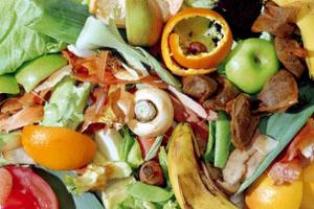
The survey, entitled A study of the UK organics recycling industry 2009, found that separate food waste collection by local authorities rose from 36,000 tonnes in 2008/09 to over 110,000 in April-December 2009. The amount collected has increased six-fold since 2007/08.
However this may represent an even greater increase as the survey only covers a nine month period whereas previous surveys covered the full financial year. The reason for the financial year no longer being used is that the survey uses regulated site and waste input data which is only available by calendar year.
The annual survey was commissioned by WRAP, working in partnership with the Association for Organics Recycling (AfOR), the Anaerobic Digestion and Biogas Association (ADBA) and the Renewable Energy Association (REA).
It covers a range of organic waste treatments including anaerobic digestion (AD), in-vessel composting (IVC), mechanical biological treatment (MBT), open air windrow composting (OAW) and thermophillic aerobic digestion (TAD).
It shows that just under six million tonnes of organic waste was treated in the UK in 2009 representing an 8.9% growth from the previous survey. The growth excludes any input at MBT facilities which was estimated at about 400,000 tonnes.
Municipal waste collected by local authorities accounted for 80% of the total with the further 20% coming from businesses.
Continual growth
Aerobic composting was found to be the dominant treatment method accounting for 90% of the six million tonnes treated across the industry. AD accounts for 1% of the overall figure with 105,000 tonnes of waste treated by this method in 2009 however this figure is expected to see continual growth as the amount of food waste collected increases.
Commenting on the survey Jeremy Jacobs, managing director of AfOR, said: The continued area of growth will be in-vessel composting and anaerobic digestion because of separate food waste collections being rolled out by local councils.
As long as the government continue to support AD then it will become the preferred option, he added.
Food waste contains animal by-products and therefore has to be treated at high temperatures through either IVC or AD.
Size
Looking at the size of the industry the research found that an estimated 2,325 full-time employees were working within organics recycling in 2009, up 36% compared with 1,700 employees on 2008/09.
The survey revealed the total turnover of the UK organics recycling industry was estimated to be 229 million. The permitted composting sector saw a turnover of 187 million while AD treatments were estimated to have an 11 million turnover.
The survey also found that the organics recycling industry was still largely dependent on the agricultural sector for its principal market which the survey shows accepts 59% of its total output.


Register for free to comment