

But, councils thinking of investing in mechanical biological treatment (MBT) plants producing SRF were warned to consider the risks if markets for all the material are not found.
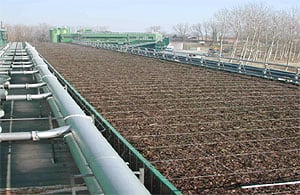
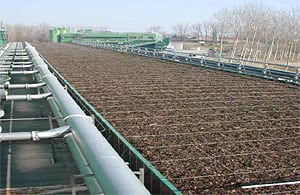 SRF is produced at the Frog Island plant by drying “black bag” municipal waste after recyclable metals and glass have been removed |
Speaking last week on the same day it opened its Frog Island waste treatment plant in East London (see letsrecycle.com story), Shanks Waste Management said it had received so much interest in fuel produced there that it would soon be “struggling” to meet demand.
The company said it had at least five contracts in place for the material produced at Frog Island as well as the soon-to-be-completed facility at nearby Jenkins Lane in Newham, including a deal with cement firm Cemex.
Shanks director of materials recovery Paul Dumpleton said at the Recycling and Waste Forum event in Birmingham: “We are providing a lot of material to the cement industry and we are seeing a great demand for the product from other companies as well. So these things start to become more and more sustainable.”
Engineered
Mr Dumpleton attributed the success of Shanks' SRF to the fact that it was a “highly engineered fuel”, which he said was stable and came within the emissions limits required. The SRF is produced after recyclable material is extracted from black bag waste and the residue is stabilised and dried at the mechanical biological treatment (MBT) plants.
He explained that Shanks was hoping to divert 150,000 tonnes of solid recovered fuel a year from landfill under its 25-year contract with the East London Waste Authority, which involves treating waste collected in the boroughs of Havering, Redbridge, Newham and Barking & Dagenham.
 |
|
|
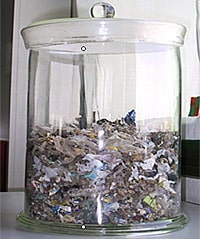
Constituent materials in Shanks SRF (%) |
|
| Paper | 55 – 58 |
| Plastics (rigid/film) | 20 – 23 |
| Textiles | 14 – 15 |
| Wood | 2 – 5 |
| Other | 2 – 5 |
Risk
Dr Egan Archer, of consultancy Juniper, claimed at the same conference that for councils intending to use MBT processes to treat waste, relying on outside markets for SRF or refuse derived fuel (RDF) residues could prove a high risk option.
He suggested that if authorities could not find a market for the MBT residues, the biodegradable content of that material was high enough that those councils would face high costs through the Landfill Allowance Trading Scheme if forced to send it to landfill.
Dr Archer said that the way to avoid this market risk was for waste firms and councils to build a thermal treatment plant next to their MBT facility – thereby guaranteeing a market for the outputs.
He said: “The LATS implications are very high for councils if they find they can find no home for SRF and it goes to landfill. But there is no market risk if there is an integrated thermal treatment plant.”
Dr Archer added that the performance of different MBT processes depended on the experience of the firm in question, and said that Juniper would soon be publishing a ratings sheet comparing different providers.


Register for free to comment