

The proposal, which has been put forward for consultation by the Scottish Environment Protection Agency (SEPA), would require applicants for waste management sites to ‘ring fence’ funds – which could then be made available for environmental protection.
The consultation, which opened last week and runs until December 4, intends to improve the way in which SEPA assess financial provision in relation to new sites and to apply a ‘new approach’ to existing sites in ‘certain circumstances’.
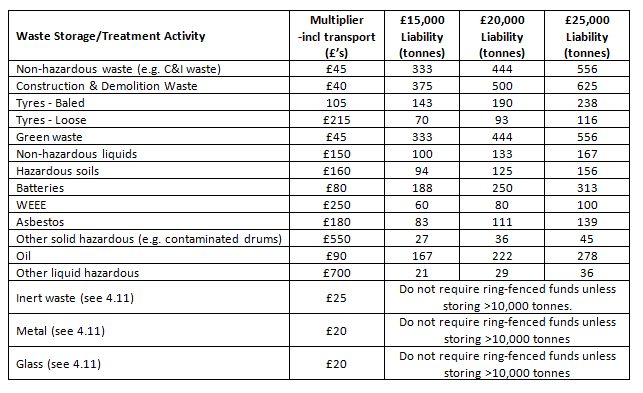
Under the proposal, the amount of financial liability for new waste sites would be associated with the type and quantity of waste. The threshold for demonstrating ring-fenced funds would range between £15,000 and £25,000.
Ring fenced funds would be required where financial liability is high or where the waste management activity is high risk. These include landfill, waste tyre storage and treatment, and RDF storage.
If SEPA received an application for a new waste management licence to store non-hazardous waste, the maximum amount the applicant could be authorised to store at any one time under its licence before being required to demonstrate financial provision through ring fenced funds would be:
- 333 tonnes if using the £15,000 threshold
- 444 tonnes if using the £20,000 threshold
- 556 tonnes using the £25,000 threshold
Where the financial liability is low or where the waste management activity is low risk, SEPA may require a simple assessment of financial provision, such as a credit check.
This would likely cover materials such as the storage of inert waste, metal or glass – though ring-fenced funds would be required for storage of 10,000 tonnes or more of these waste types.
Consultation
The consultation includes a table indicating the scale and type of waste management activities that are likely to trigger a requirement for financial provision to be demonstrated by way of ring-fenced funds.
According to SEPA, the ‘risk-based’ approach would provide ‘a balance between protection of the environment, landowners and the public purse on one hand and impact on waste operators on the other’.
SESA
Commenting on the proposal today, Stephen Freeland, policy executive at the Scottish Environmental Services Association, welcomed the measures that would bring the country ‘in line’ with the rest of the UK.
However, he urged caution over plans to extend the system to ‘non-landfill’ activities, which could potentially hinder investment in the industry.
He said: “It is important that operators of permitted waste management facilities are able to discharge their liabilities and SESA supports measures to make it more difficult for individuals to set up, accumulate waste and then abandon their responsibilities.
“We note that SEPA’s proposals for landfill operators to demonstrate financial provision through ring-fenced funds brings Scotland in line with the rest of the UK. However, extending the same requirement to certain non-landfill activities will require more detailed consideration to better understand the impact on tying up capital and potentially constraining investment within the legitimate industry.”

Register for free to comment