


Scotland’s municipal waste recycling and composting rate continued its slow but steady climb to reach 37.7% for the year ending September 2010, the latest quarterly figures published yesterday (February 16) by the Scottish Environment Protection Agency (SEPA) have revealed.
The figures, which are based on data submitted by Scotland’s 32 local authorities and collated by SEPA, represent a 2% growth from the rate recorded for the same period the year before.
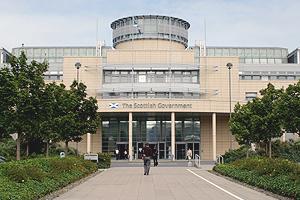
However, this rate of increase adds weight to the likelihood that Scotland will miss the 40% household waste recycling and composting target set by the Scottish Government for the 2010 calendar year under its Zero Waste Plan’.
Commenting on the figures, Kenny Boag, SEPA’s national waste policy unit manager, said: “The rolling year figure that we have published today is the one used to assess how close Scotland is to achieving the national target of 40%.
“The figure for the same 12 months in 2008/09 was 35.7%, so I am pleased to note that, thanks to the continued efforts of Scottish local authorities and their private sector partners, we are showing gradual improvement towards our shared recycling goal.”
Under the plan, the Scottish Government is also aiming to reach future household waste recycling goals of 50% by 2013 and 60% by 2020.
UK
| Period(12 months) | Quarterly Year Figure | RollingYear Figure | |
|
Year ending September 2009 |
39% |
35.9% |
|
|
Year ending December 2009 |
33.8% |
36.4% |
|
|
Year ending March 2010 |
34.5% |
36.7% |
|
|
Year ending June 2010 |
40.7% |
37.2% |
|
|
Year ending September 2010 |
40.5% |
37.7% |
|
| Source: Scottish Environment Protection Agency | |||
For the most recent period where figures can be compared – the year ending June 2010 – Scotland’s municipal waste recycling rate continued to lag behind England’s, as it reached a 37.2% for the year ending June 2010, compared to 39% in England.
Both countries are, however, experiencing similarly-paced increases, with neither achieving a rolling year increase above 1% from one quarterly set of data to the next in the past year.
However, yesterday’s figures show that, alongside England, Scotland is lagging behind Wales, with the 40.5% quarterly figure it achieved for July to September 2010, well down on the 45% Wales recycled over the same period (see letsrecycle.com story).
Quarterly figure
The Scottish quarterly figure represents a slight drop from the 40.7% recorded for the previous quarter, but is also a year-on-year increase from the 38.9% recorded for the same quarter a year earlier.
The recycling figures were accompanied by a drop, in tonnage terms, in the amount of municipal waste being collected by local authorities, down 69,675 tonnes for the year ending September 2010 compared to the 3,184,254 tonnes recorded for the year ending June 2010.
At the same time, the amount of municipal waste sent to landfill fell by 102,814 tonnes to 1,893,935 tonnes, as did the tonnage of biodegradable municipal waste, such as garden and food waste, that was landfilled – down by 68,066 tonnes to 1,135,798 tonnes.
Councils
In terms of individual council performance, the figures show that, in the rolling year ending September 2010, half of Scotland’s 32 councils achieved above the 40% overall municipal waste recycling and composting target.
This list was again topped by Clackmannanshire, which reached a 48.5% figure – a slight improvement on the 48.3% it recorded for the year ending June 2010, while Fife was the next best performing local authority with a 46.8% rate, closely followed by Falkirk with 46.6%.
Related links
Meanwhile, the Shetland Islands moved off the bottom of the national recycling table, with its annualised 19.8% rate seeing it overtake Eilean Siar, which recycled or composted 19.7% of its council-collected municipal waste for the year ending September 2010.
Notably, the recycling rate for the Scottish council which creates the most municipal waste, Glasgow, remains well below 40%, with 23.2% of the city’s 330,397 tonnes of municipal waste arisings collected for recycling and composting in the period October 2009 to September 2010.


Register for free to comment