



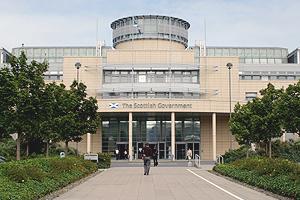
The Scottish Government revealed in its Zero Waste Plan in June that it would introduce a carbon metric for waste to identify and prioritise the materials with the highest environmental benefit for recycling (see letsrecycle.com story).
According to the Zero Waste Plan, the carbon metric is needed in Scotland to recognise the fact that using waste tonnage as a basis for measuring recycling does not always promote waste prevention and does not focus recycling towards the material with the greatest environmental benefit.
At the same time, it says the use of weight as a measure and target needs to be maintained as this is universally understood and forms the basis for meeting EU waste directive requirements.
With these principles in mind, ministers intend to measure performance against tonnage and the carbon metric. The tonnage of each material arising will be weighted according to the greenhouse gas benefits to calculate the recycling percentage.
Weightings
Weightings will depend on the greenhouse gas emissions which occur during the production of the virgin material.
This means that manufactured materials, such as metals, glass, plastics and paper, have a greater weighting, with aluminium, whose production is the most carbon-intensive, being allocated a weighting of 100.
Scotland's 2013 target of recycling 50% of all waste will be the first target to be measured on the basis of the carbon metric and is expected to influence which materials are prioritised for recycling, as well as the choice of collection and treatment methods. This will make Scotland the first part of the UK to use carbon to measure recycling performance.
By 2025, it is hoped that all Scottish waste streams will be measured against the metric, replacing weight as the unit of measurement.
Over the summer, the Convention of Scottish Local Authorities' (COSLA) waste policy manager, George Eckton, said that the implications of reporting against tonnage and the carbon metric would need to be addressed promptly.
In a report providing an update to COSLA's Regeneration and Sustainable Development Executive Group, he said: “Local authorities will need to be assured that meeting carbon metric targets and continuing to meet tonnage targets are not mutually exclusive and do not require significant investment in services in a period of limited resource.”
A task and finish group has been set up to develop the metric, including representatives from the Scottish Government, SEPA, industry, local authorities and COSLA.


Register for free to comment