


The figures published by the Scottish Environment Protection Agency (SEPA) today (July 4, 2007), showed that the 32 local authorities achieved a combined rate of 25.3% in 2005/06.
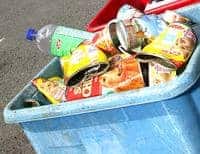
-
Clarification [July 12, 2007]: Figures were published on July 4, 2007 and the Scottish Executive later amended information regarding these figures to confirm that they cover the year 2005/06, rather than 2006/07.
Clackmannanshire topped the league table with a rate of 41.3%, followed by South Ayrshire with 37.4%. The Shetland Islands propped up the bottom of the table with a 10% rate and Eilean Siar was in second last position with 11.7%. Glasgow's rate was 15.7% and Edinburgh hit 22.6%. Aberdeen attained 19.2% with Dundee achieving 30.5%.
More to do
Scotland's environment minister Mike Russell told newspaper The Scotsman that the figures were encouraging but that “some local authorities will need to do better”.
Recycling champion Clackmannanshire council also believes it has much more to do even though it has the best rate for the second year running.
Head of environmental services Ewart McAuslane said the local authority, in partnership with Stirling and Falkirk (who achieved rates of 34.2% and 31.1% respectively), was one of the first to secure funding under phase one of the Strategic Waste Fund.
Mr McAuslane said this money from the Scottish Executive helped boost recycling and that he expected other councils to catch up when their funding came through. He added “there's no reason to think we won't all be on the same level”.
Funding
But, the waste expert said funding was vital for councils to achieve increasingly higher recycling rates. Clackmannanshire has applied for additional cash under phase two of the Strategic Waste Fund and has been told by the executive a decision “will be made in due course”.
He added: “We are delighted to be at 40% but it's not good enough. We believe there is still quite a lot to do. We will struggle to maintain our position without the money. Recycling is not a cheap alternative to disposal. If we don't get waste fund money, then we don't have much further to go.”
Under its present arrangements, material in Clackmannanshire is source-separated at kerbside or civic amenity site – nothing is sent to a materials recycling facility (MRF).
Residents have a brown residual waste bin, a blue bin for garden waste and cardboard, and a box for plastics, glass, textiles, and cans.
If it had the necessary funds, Clackmannanshire would introduce three bins and a box. The blue bin would switch to taking cardboard and dry recyclables, to be sent to a MRF. Garden waste in the third bin would be collected on a seasonal basis and the box would be then be used for glass and small waste electrical and electronic equipment (WEEE).
The council has also introduced fortnightly residual waste collections which Mr McAuslane said was vital to boosting recycling. He explained that unlike in England, people in Clackmannanshire “moved quite smoothly to it.
“Without it we would have been nowhere near the 40%,” he added.


Register for free to comment