


Assessing existing waste treatment capacity, it concluded that there is a “significant requirement” for infrastructure development in Scotland to meet the country's 2013 target or recycling 50% of municipal waste. And, it stated that steps need to be taken now to achieve this if projects have an assumed minimum lead-time of two to three years.
Under its Zero Waste targets, Scotland intends to recycle or compost at least 40% of its municipal waste by 2010, 50% by 2013, 60% by 2020 and 70% by 2025, with no more than 5% of waste going to landfill in 2025.
Capacity
Information provided by the Scottish Environment Protection Agency (SEPA) to SQW Energy showed that there are currently no MBT facilities in Scotland, eight EfW/incineration facilities and one AD plant. Although, out of the 805 operational sites, 157 were classed as ‘multiple activity' meaning a primary function could not be deciphered.
Breaking down the approximate capacity requirements in the country in 2013, the report states 290,000 tonnes of EfW capacity would be needed by 2013, 160,000 tonnes of MBT capacity, 170,000 tonnes of AD capacity and 80,000 tonnes of aerobic digestion capacity.
These figures are based on 50% of municipal waste being collected source segregated and would require additional MBT and EfW plants between 2013 and 2025.
The research states that planning constraints could hinder Scotland achieving the 2013 capacity requirements – which is brands as a “waste infrastructure hurdle” – and claims that increased source segregation of waste, up to 65% of waste, would be needed to alleviate the pressures on infrastructure development.
In total, the research claims that Scotland will need to develop 43 facilities across a range of technologies with a view to bringing 1,628,000 tonnes of capacity online if it is to meet the EU targets and the Scottish Government targets, while only source segregating 50% of waste.
Costs
Looking at the costs associated with developments, the research project found that meeting both Landfill Directive and Scottish Government targets would cost the country £1.4 billion between 2010 and 2025 above existing spending levels, with £449 million earmarked for infrastructure development.
However, the research did claim that the “largest savings” could be realised through work to reduce collection and processing costs by tackling waste arisings, increasing source segregation of waste and making the existing infrastructure more efficient – i.e. increasing participation rates and lowering contamination.
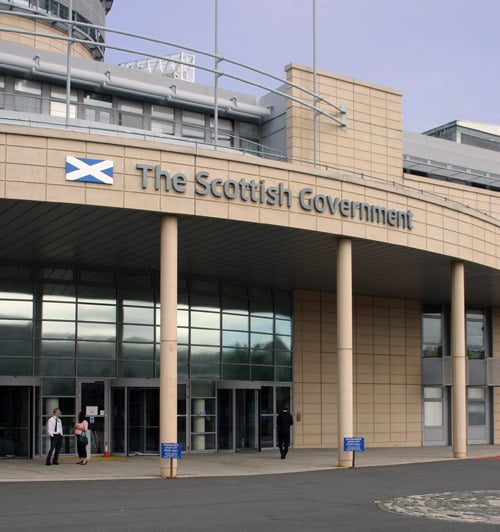
The research comes just ahead of the Scottish Government launching its Zero Waste Plan. The Plan is intended to give a comprehensive breakdown of how the Government will reach the Zero Waste targets and is anticipated imminently.
It emerged last month that the Scottish Government was considering shelving plans for a cap on incineration – which would have seen the amount of municipal waste treated through thermal methods limited to 25% by 2025 (see letsrecycle.com story).


Register for free to comment