

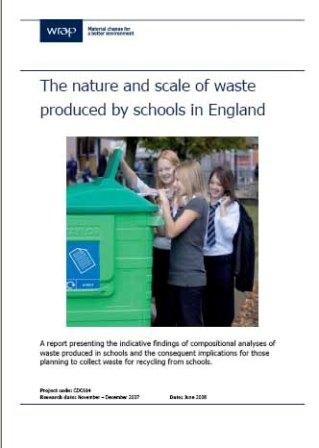
Using data gathered by domestic waste analysts WastesWork, the 27-page document includes recommendations for how local authorities can tackle the waste produced in the education sector, ranging from locating recycling containers in appropriate places in schools to reviewing purchasing policies in a bid to reduce and prevent waste.
Philip Ward, director of local government services at WRAP, said: “This research highlights the potential ‘easy-win' of collecting readily recyclable materials from a relatively small number of sites, and local authorities should be looking to see how they can help to make this happen.”
Waste
WRAP commissioned the research in a bid to gauge the types and quantities of waste being produced in schools, and intended local authorities and commercial waste collection companies to use the data to take amounts, types and volume of school waste into consideration in existing waste management services.
Mr Ward said: “With nearly 7.5 million schoolchildren in England alone, schools have a great opportunity to contribute to solving our national waste problem and educate tomorrow's consumer. There are also immediate benefits for Council Tax payers if the cost of waste disposal can be reduced and for the environment if resources are used more effectively.”
The study found that waste produced, which was mainly comprised of food, paper and card, totalled 250,000 tonnes a year across England's 20,871 primary and secondary schools, however, the average recycling rate for primary schools currently sits at 13%, with secondary schools only slightly higher at 20%.
Study
Each day during the study, schools bagged all of the waste they generated and WastesWork collected and transported the bagged waste to a sorting area provided by local authorities. Waste streams that would otherwise have been sent for recycling were similarly bagged and collected, but segregated from the residual waste to enable separate reporting.
The study found that, on average, primary schools produced 45kg of waste per pupil as opposed to 22kg per pupil in secondary schools over a 40 week academic year. Average contamination rates (where non-recyclable waste had been put in with recyclable waste) were found to be 23% at primary schools and 4% in secondary schools and the study also found that urban schools usually produced more waste than rural schools.
Using the figures compiled for the study, WRAP hopes that councils will communicate with school staff to establish the benefits and logistics of school recycling streams in a bid to prevent waste from the education sector ending up in landfill.

Register for free to comment