

The study, conducted by the consultancy Eunomia, was undertaken to compare cost benefits of different biowaste treatment systems in the UK.
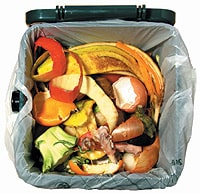
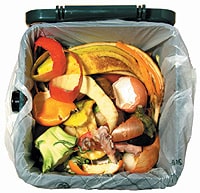 The Eunomia report recommends use of the kitchen caddy, like this one from Preston |
The findings revealed that separate collections of food waste are more economical than mixed collections of green waste and food waste, since food waste must be treated in accordance with the Animal By Product Regulations. These state that food waste must be processed in in-vessel composting (IVC) facilities, which tend to be more expensive.
WRAP quotes 35 per tonne for the composting of mixed garden and food waste in an IVC, where the majority of the material is garden waste.
Where there is a higher proportion of food waste in the mix, the report uses the figure of 40 per tonne as the gate fee – the extra cost down to odour suppressants needed and the work needed to maintain material of the desired structure of the compost.
As householders tend to recycle higher tonnages of green waste than food waste, the report recommends that green waste should be processed separately in open-windrow composting facilities, which can be processed for just 19 per tonne.
However the report states that the more rural the area, the “greater the temptation” will be to collect garden waste free of charge and to “capture kitchen waste by simply asking households to add kitchen waste to the existing free, usually fortnightly, garden waste collection”.
Frequency
For separate collections of food waste, the study also recommends that the “frequency of collection should be higher than for refuse” as it “has been shown to increase the capture of food waste.”
Unlike other reports on the subject, Eunomia recognised that the amount of biowaste householders recycle is affected by the type of biowaste collection system they are offered.
Eunomia also said that promoting home composting and providing householders with kitchen caddies and kerbside containers to make the separation of food waste easy for residents are two ways to optimise biowaste collections.
As reported by letsrecycle.com today, Bristol city council has revealed good results for its kitchen caddy system (see letsrecycle.com story), but the authority does collect food waste and green waste together.
Home composting
On home composting the report revealed that “on average, a household that stops composting at home is likely to send an additional 105kg per annum” to civic amenity sites and will set out an “additional 115kg per annum into the collection system.”
And “the quantities of waste being composted by active participants is higher than was previously thought, especially in collection authorities with garden sizes averaging over 200 square metres.
| Related links: |
This work suggests that in these homes, an estimated 340kg of material per household per annum is dealt with through home composting
Echoing the waste strategy for 2007, the report also identifies anaerobic digestion as a technology which offers “additional environmental benefits to in-vessel composting for food waste”. However, the gate fees are more expensive, with Greenfinch's anaerobic digestion plant quoting between “40-50 per tonne” to process organic waste.

Register for free to comment