

Concerns about the tightening up of regulation of composting sites by the Environment Agency have come to light in the latest organics recycling industry survey, published today by WRAP.
The Survey of the organics recycling industry in 2010 is the latest annual survey for the sector and quantifies the recycling of organic wastes in the UK via composting, anaerobic digestion and mechanical biological treatment (MBT) facilities. It is widely recognised as the most definitive market analysis of the organics industry.
The survey shows that 7.2 million tonnes of organic waste was recycled in 2010, compared to just over six million tonnes in 2009, with over 1500 people employed in the sector.
And, while new markets such as biomass and improved prices for compostare seen by composters as opportunities for their businesses, a number of threatsare also highlighted.
Key among theseare concerns over regulatory problems with the EA and EA tightening up on rules and regulations. Other concerns include competition for feedstock and operational costs.
Data
The survey was carried out by consultants Urban Mines and Walker Resource Management between January and April of 2012, collecting data on the state of the sector in 2010.
A survey of the organics processing industry has been undertaken since the mid-1990s, originally by The Composting Association (now the Association for Organics Recycling) and more recently by WRAP with the support of AfOR, the Anaerobic Digestion and Biogas Association (ADBA), the Renewable Energy Association (REA) and the Environmental Services Association (ESA).
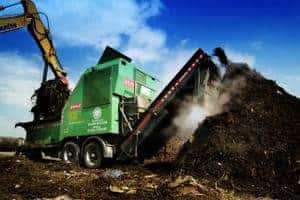
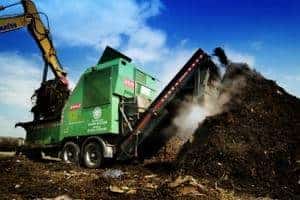
The report shows that composting sitescontinued to processthe majority of organic waste in 2010. Of the 7.3 million tonnes of organic waste recycled during the year, 5.4 million tonnes was sent to permitted composting sites while 1.15 million was sent to anaerobic digestion facilities, with the remainder sent to sites operating under an exemption. A further 1.28 million tonnes of mixed waste was sent to MBT facilities.
Despite this, AD is providing growth for the sector. In 2010 the number of permitted AD sites reached 48 and total input of organic waste processed via AD top the one million tonnes mark.At the same time, composting input volumes remained fairly static with a total input of 5.44 million tonnes in 2010, up by just 3.9% on the 2009 survey.
“This study illustrates the significant and growing role of AD technologies, and of the market for AD digestate, across the UK”
Ian Wardle, WRAP
Ian Wardle, head of organics and energy from waste at WRAP, said: This study illustrates the significant and growing role of AD technologies, and of the market for AD digestate, across the UK. Since 2010 this growth has been given further impetus through strong support from all UK governments, and from WRAPs support for the sector which includes the 10 million AD Loan Fund.
Composting
Looking at composting in particular, the survey found that composting capacity reached seven million tonnes in 2010, indicating that 78% of capacity was being utilised, with 22% to spare. The vast majority (88%) of input was municipal waste while 12% was commercial and industrial waste. Most (65%) of material was sent to open windrow facilities.
The majority of output from composting facilities was found to be coarse 0-40mm grade compost which was used in agriculture, but more value-added markets were coming through and prices for compost firmed between 2009 and 2010, with PAS100 material attracting a premium. Despite this, the report notes that there were still zero or negative prices being charged to provide compost. The survey estimates the value of the recycled compost market in 2010 to be 9.2 million.
AD
For AD, the survey found that there was 1.7 million tonnes of capacity, indicating that 67% of this was being utilised. A substantial 73% of sites reported having spare capacity which the report puts down to many sites being new and going through commissioning.
With regards to feedstock, 37% was found to be municipal, 52% non municipal and 11% non-waste. 71% of sites used mesophilic systems, whereas the rest were thermophilic. 94% of all AD systems were wet, with just 6% dry.
The survey found that biodegradable bags were recovered by 29% of sites and were an issue= because usually they break down poorly or not at all.
Agriculture provided the main end market for digestate.
MBT
Related Links
With regards to MBT, the report notes that there were 23 plants operational in the UK in 2010. Concerns raised by operators included a lack of end markets for compost-like output, the material produced after recyclables have been removed and the waste has broken down.
The full report can be found here.


Register for free to comment