

The ISWA World Congress was held for the first time in South East Europe in Serbia’s second largest city of Novi Sad in late September 2016. This was an opportunity for the former Yugoslav states and neighbouring former Communist countries to participate in a Congress geared to their needs but also of advantage for other transition and less developed economies. Therefore, there was a considerable amount of time devoted to landfilling, the fundamental basis of sound waste management practice. In addition, there was much to interest practitioners from more developed states, especially the sessions devoted to the circular economy and its associated issues.
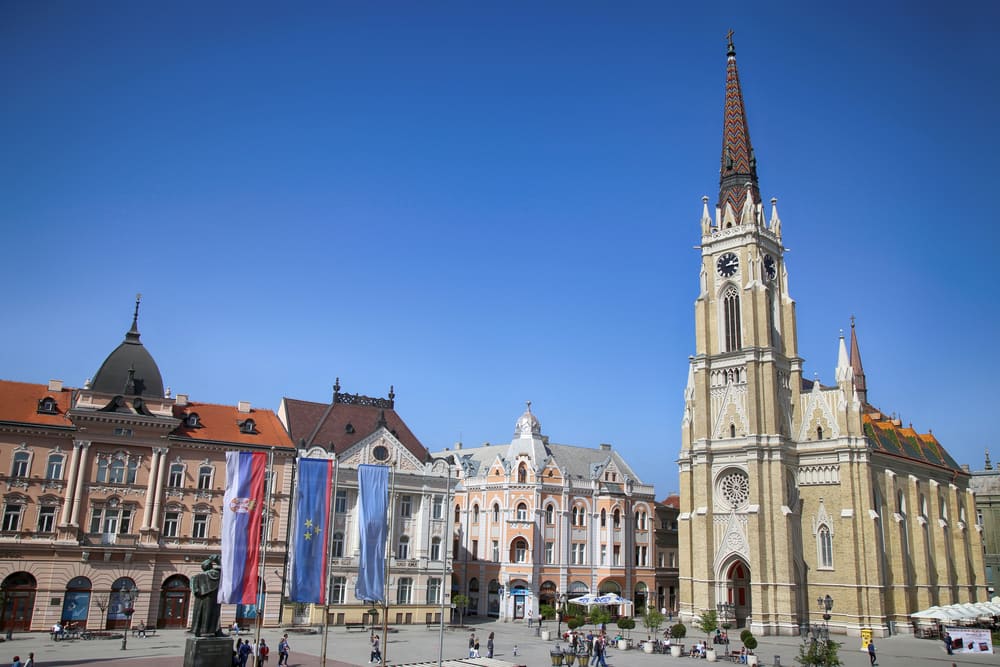
Serbia is aspiring to become an EU Member State (MS) and is therefore trying to improve its waste management situation. Serbia is a small country, 77,000 km2 with 7.1 million people and with a GDP per capita of €10,000 which in purchasing power is equivalent to 37% of the EU average, so even pound sterling goes a long way.
The waste management system in Serbia is based on its 2009 environmental legislation, which includes the polluter pays principle. While most household and commercial waste is collected by public municipal companies there are three private companies collecting municipal waste, all Austrian. The 10 sanitary landfills are owned by the public utility companies with the cost of landfill being around €10-20 per tonne, but there are in addition hundreds of local waste dumps. The City of Belgrade in 2015 announced a public-private partnership tender for the huge Vinca landfill to also include an energy from waste facility. There is no landfill tax and unlikely to be until all the dump sites are closed.
Beverage Container Deposits
The debate on deposit systems for beverage containers showed how divergent views were regarding their environmental, economic and social costs and benefits. The opening speaker, Chris Sherrington, works for Eunomia, a consultancy that has undertaken research on the issue for both the UK government and the EU Commission. He stressed the environmental advantages of deposit systems, especially a reduction in litter and the global issue of marine plastic litter.
A later speaker, Joachim Quoden from Expra, which represents 25 not-for profit packaging compliance schemes across Europe, noted that most countries had moved away from deposits for beverage containers relying on wider extended producer responsibility (EPR) initiatives to provide consumers with the opportunity to have beverage containers collected together with most other types of recyclable packaging items.
Indeed, there has been only two EU Member States that have introduced deposit scheme legislation since the Packaging Directive was introduced in 1994. Germany has deposits on beverage containers because it was in their packaging legislation in order to encourage refillable containers. In the case of Lithuania, its legislation was introduced in order to protect local brewery companies from competition. However, it should be noted that in both cases the proportion of beverage containers that have deposits has progressively declined as has the proportion of deposits reclaimed by consumers.
Reverse vending
Weine Widqvist, the managing director of Avfall Sverige, noted that the Swedish Returpack deposit system was highly successful with an overall beverage container return rate of 84.4% overall (85% for cans and 83.5% PET bottles), a rate that has been very consistent for the past decade. Some 97% of containers are returned to 3,100 stores with reverse vending machines.

There was a local presentation about the deposit system in Croatia given by Zvonimir Majic, head of the Department for the Management of Special Waste Categories in the Croatian Environmental Protection and Energy Efficiency Fund. A deposit system for PET containers and aluminium cans was introduced in Croatia in 2006 with a voluntary deposit for fillers of glass containers. All these containers of more than 0.2 litres are obligated. All liquid beverages were covered until 2015 when milk products were exempted in order to encourage consumption of these beverages. All retailers are required to impose deposits and accept back empty containers to refund deposits to consumers except for retail premises of less than 200m2 floor space. Initially all the operational and logistical activities needed for the Croatian deposit system were dealt with directly by the Environmental Fund.
However, over time an increasing number of these operations have been outsourced. There are now 25 collectors from the retail outlets, 20 depots for storage and sorting and five recycling companies involved. The retailers have started to use RVMs with 50 now in use in the 3,000 sites that accept back deposit containers from the public.
Croatia
Statistics of the return rate for deposit containers in Croatia look odd in that in while in 2006 the rate was 93%, it went up to 116% and 118% in the following two years and was 104% in 2009 and 2010. While part of the explanation was the return of containers that had been purchased prior to the introduction of the deposits a higher proportion was due to cross-boundary movement from neighbouring states. The cross-boundary issue was raised in the question session and in most cases is resolved by the retailer accepting the container for recycling but not paying out any deposit. This is beneficial in pushing up the return rate but keeping costs down.
One of the main problems with deposit return systems is assessing the overall costs, particularly for countries such as Sweden and Norway, where there are alternative mechanisms for the recycling of beverage containers through household or communal collection facilities. Therefore, running these two recycling systems at the same time will add to the cost to the consumer, but there is little discussion about abandoning deposit systems where they have been in place for a long time as far as the consumer is concerned. Opposition from industry is vociferous to the idea of introducing deposits, as was evident from the reaction from industry representatives present at the session of the Congress.
Sustainable systems

The deposit system session was suitably followed by a discussion on sustainable systems for recycling, apposite given the recent turmoil in markets for secondary materials. John Skinner, who had recently retired from the ISWA Board, related that due to decline in secondary raw material prices in the USA, particularly on the West Coast heavily dependent on the South East Asian markets, companies were changing their business models.
Therefore, risk sharing on prices with the municipalities taking on more of the potential downside of the volatility of secondary materials prices has become more common. In particular because of its high costs, many companies had now decided to abandon the collection of glass containers. John Skinner also noted that an increasing proportion of products were now being packed in multi-layer plastic pouches rather than recyclable packaging.
There are different aspects to the concept of sustainability so that in Serbia the collection and recycling of PET plastic bottles has a different aspect in that there are around 30,000 waste pickers collecting recyclable wastes in order to survive economically, from men with tricycles collecting cardboard from public waste bins in the centre of Novi Sad through to picking PET bottles from landfill sites, “sub-contracting” to landfill operators.
The details of the Serbian PET bottle waste collection and processing situation was explained by Mihail Mateski, the General Manager of Greentech, a Serbian company that buys PET bottles for reprocessing in Serbia. The company acquires 45% of its PET bottles from waste pickers, with a further 19% coming from landfill collection, 10% from industry and the remainder from the public utility companies. For the last few years around 33,000 tonnes of PET bottles have been collected with the majority repressed in Serbia, 10,000 tpa by Greentech at its plant at Backa Palanka, 45km west of Novi Sad, and by two other companies. Greentech also processes 3,000 tpa of polyethylene film at its site using a separate facility and different technology.
Copenhagen
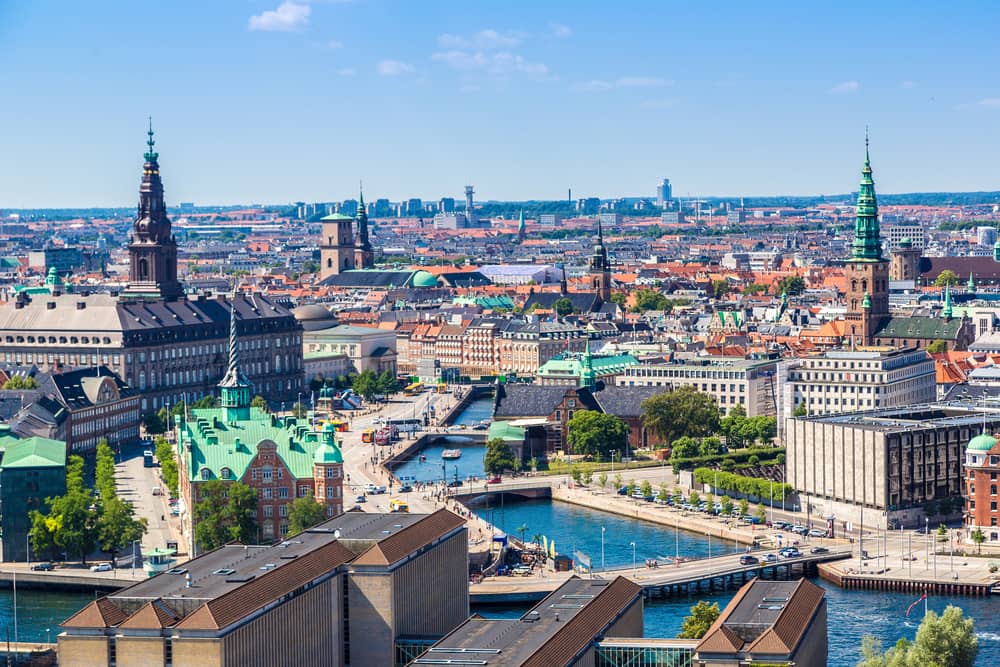
There was an interesting presentation on how Copenhagen is striving to push up its recycling rate. Bo Gottlieb, from the City’s planning department, stated that Copenhagen had undertaken an assessment of the MSW recycling performance of the 28 EU capitals in order to assess what were the key factors in achieving a high recycling rate. In 2015, Copenhagen had a 34% recycling rate and on 16 September 2016 the City’s politicians agreed a target of 45% recycling by 2018, with a 20% reduction to incineration compared to 2010. London came out above average from the Copenhagen analysis but lower than Dublin and Tallinn. The key factors that generated high recycling rates were:
- High level of service and a combination of different collection options
- Political focus
- Intensive and continuing communications
- Separate collection of organic waste
- Collection of paper and cardboard in the same containers
Copenhagen introduced its organic (kitchen) waste collections only at the beginning of September 2016 for single family units and with communal bins in apartment blocks and arrangements for the washing of the bins, which will be important in that the proportion of apartment blocks in the city is 90% of the total residential accommodation. The city is also now collecting soft plastics together with the hard plastic containers it has been collecting for the past three years, and collects cardboard together with paper.
Extended Producer Responsibility
At the EPR session there was the formal launch of updated guidance on EPR schemes from the OECD by Peter Borkey of the OECD’s Environment Directorate. The 300-page guidance document updates the last guidance from the OECD published in 2001. There are now over 600 EPR schemes worldwide, but the EU has more than 70% of that total.
The main conclusions from the OECD’s research are that EPR systems have reduced disposal and increased recycling of items subject to EPR regulation, that there is a reduced burden on public budgets and promoted economic opportunities but has had limited impact on design for waste prevention and recycling. The guidance covers: governance, competition, design for the environment and the informal sector. The last aspect was not covered at all in the 2001 guidance but as has been increasingly recognised by the waste management sector there has to be both recognition of the informal sector and policies and practices for EPR will need to ensure a collaborative approach.
Julius Langendorff, from the Directorate-General for the Environment at the European Commission, dealt with the issue of EPR as an essential tool to implement waste legislation in the EU. At present there are just the three EU EPR Directives for ELVs, WEEE and batteries but most EU Member States, the exception of the UK, have statutory EPR provisions for a wider range of items including tyres and graphic papers (20 and 10 Member States respectively) and lubrication oil, for example.
For packaging, the UK is one of the 25 Member States that have legislative provision for EPR, Denmark being one that still does not have EPR for packaging.

Ross Martin, the chief executive for the Global Product Stewardship Council, dealt with the issue of the voluntary approach to producer responsibility, often the preferred option in federal countries such as the USA, Canada and Australia. However, often producers themselves will seek regulatory underpinning. He noted that in British Columbia, there was a very efficient system of regulation for their comprehensive EPR programme covering 25 items, which is administered by only four people.
Game of Thrones
At the Congress gala dinner there were awards for publications, video and promotional campaigns.
The best publication this year was presented by actor Tom Wlaschiha, famous for playing Jaqen H’ghar in the TV phenomenon Game of Thrones. The joint first prize went to Professor Ian Williams, David Turner and Simon Kemp of the University of Southampton, for their journal article Greenhouse gas emission factors for recycling of source segregated waste materials. This continues a tradition of success for UK academics in winning the ISWA publication award.

Register for free to comment