

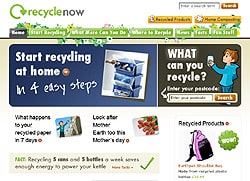
The website – at www.recyclenow.com – has been re-designed to provide more information for those already involved in recycling schemes, as well as a dedicated area for beginners.
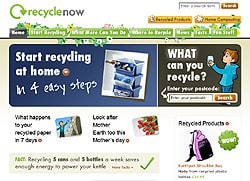 Those behind the Recycle Now site say 70,000 now visit the site each month |
Those new to recycling are invited to “start recycling at home in four easy steps”, with a section showing how to get involved with council collection schemes.
The page includes a facility for householders to search for their local situation regarding the range of materials that can be collected and the location of nearby bring banks. The section also provides tips on how to start recycling at school, at work and in the garden.
Advanced
Under the more advanced “What more can I do” section for those people already up to speed on the basics, the Recycle Now campaign offers tips on minimising the production of waste.
As well as information on which materials are recyclable, on re-using carrier bags and cutting down on the use of disposable products such as nappies, the advanced section offers tips on minimising the waste impact of home improvement projects.
The advanced section also includes a compost buying guide, tips on re-using goods through “free-cycling” and seeks to provide information to dispel certain “myths” about recycling with an explanation of the export of materials abroad.
Commenting on the new website, WRAP director of communications Gareth Lloyd said: “By creating two new and distinct areas on the site, we can tailor the advice and information we provide to two very different recyclers. One for those who want to know the basic ‘what’, ‘how’ and ‘where’, and another for those who need more detailed information.”
| Related links: |
Mr Lloyd, who runs the Recycle Now campaign for the government-funded Waste and Resources Action Programme, said the site now attracts 70,000 visitors each month. He said the re-design had come partly as the result of comments and requests for information from visitors.
The campaign organisers revealed that a new section is being developed to show what happens to materials when they are recycled, including video clips to show the various stages of the recycling process.
Information on the paper recycling process is already provided, with plans in place to add similar components for plastic, glass, aluminium and steel.

Register for free to comment