

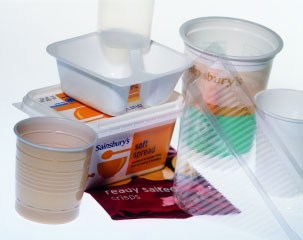
Mr Foster claimed that the lack of clear information given by the sector and local authorities could lead to “potential confusion” and also “inconsistent specification” of mixed plastic waste.
He called for consistency in the definition of mixed plastic- identifying it as non-bottle plastic packaging waste sourced from the domestic stream – and outlined work already done by Recoup to encourage a uniform approach to its collection in its publication of the ‘Domestic mixed plastic packaging – recycling guide' (see letsrecycle.com story).
In addition, Mr Foster urged the sector to continue to develop plastic bottle collection infrastructure butnot disrupt existing recycling activities for other materials in an attempt to add the mixed plastic fraction.
Communication
Echoing Mr Foster's call for better communication, Paul Davison, managing director of Proteus PR, said that local authorities needed to “know their audience” in order to effectively deliver messages on mixed plastic recycling and be aware that it would involve a behavioural change in residents which could take time to appear.
Mr Davison also said that councils would need to keep their messages simple and plan communications early in order to allocate resources and provide required time for it to take hold.
WRAP
Also speaking at the event, Paul Davidson, special advisor on plastics at the Waste & Resources Action Programme (WRAP) outlined the work that the government-funded research body has done on mixed plastics recycling and the areas it would focus on in the future.
Mr Davidson drew attention to the work being done by WRAP to investigate the possibility of using mixed plastic waste in the production of food grade plastic packaging (see letsrecycle.com story) and claimed that local authorities should be encouraged to “recycle as much mixed plastic packaging as possible”.
Mr Davidson said that the rest of the mixed plastic should be recovered to be used in Solid Recovered Fuel (SRF) applications, but warned against the use of it in incineration unless extra work was done to improve the efficiencies of English facilities.
In addition, he also said that WRAP would be undertaking work on the detection of black plastics, such as microwaveable trays, which cannot be seen by optical sorting devices but said “this is expected to be a significant challenge”.

Register for free to comment