


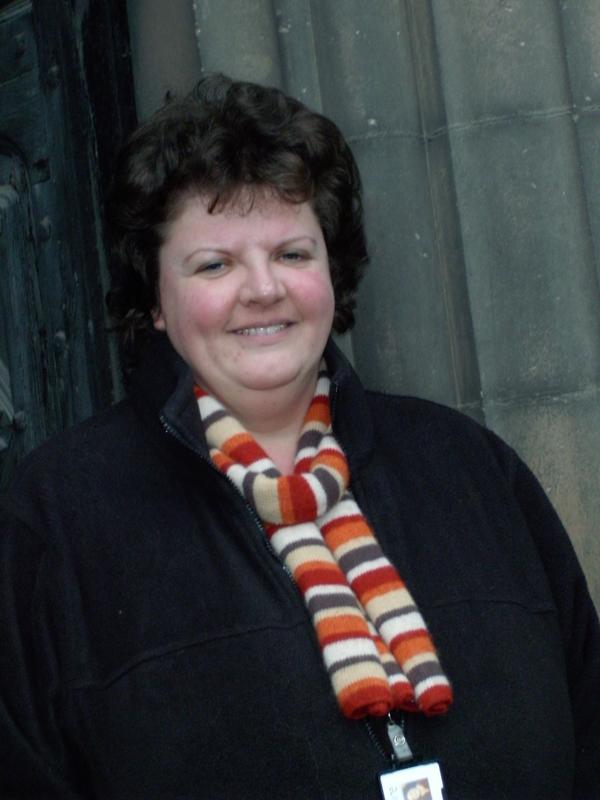
One of the many great things about LARAC (being chair allows for a certain amount of bias) is that so many of the membership are involved in the day-to-day, in-your-face aspects of waste management.

Joy Blizzard is chair of the Local Authority Recycling Advisory Committee and waste initiatives officer at Shropshire council
There is not much danger of impractical and ivory tower thinking – priceless in these days of slightly strange suggestions from desk driving policy wonks and think tanks. There is no surer way of finding out what the public are thinking and doing than to spend time answering the phones and dealing with valued customers at events and roadshows. It keeps us grounded, sharp and knowledgeable.
Or so I had to keep telling myself as I rolled out of bed to spend 19 hours of my weekend talking to people at a “Love Food Hate Waste” roadshow. It's a great campaign from WRAP – well researched with excellent creatives. Our team's biggest problem was getting over the initial “I don't waste food” response from most of the worthy residents.
The day was interspersed with the occasionally brutally honest resident whose response to the facts on food wastage was “yep – that's me I'm afraid” but on the whole most were genuinely convinced that they themselves don't contribute to the 6.7 million tonnes of food waste produced each year.
WRAP's research was smart enough to discover that even those adamant that they don't' waste food throw away 90kg per year – and what's more, the difference between age groups is not as great as one might expect. Of course, similar responses to recycling also abound – “I recycle everything I can” is the common talk on the doorstep where the contents of the bin tell a very different story. Well, we all think our driving is better than average don't we?
I suppose many of us think of the hard to reach groups as those with no inclination to recycle, live in deprived areas and quite often lead lives that are difficult enough without getting to grips with recycling collections. But I'm starting to think that the happily complacent are just as hard to reach or, as Jane Austen put it, those who live in “such continuance in wilful self deception”. Any ideas on how to reach them would be appreciated.

Register for free to comment