

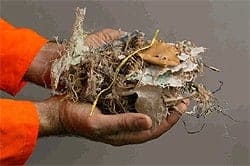
And, the Dutch company receiving material from West London has said that it makes sense to export RDF from the UK rather than building new incinerators.
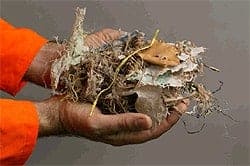
Refuse-derived fuel (RDF) or solid recovered fuel (SRF) is produced by shredding and dehydrating solid waste and since it was first permitted for export in 2010, export levels have rocketed (see letsrecycle.com story).
West London
Twence, a Dutch energy-from waste specialist, last month announced that it had entered into a five-year agreement with London-based waste management company Seneca to burn tens of thousands of tonnes of RDF from West London at its plant in the East of the Netherlands.
The RDF is produced by Seneca at its dirty materials recycling facility in Wembley under a 7 million, two year contract to treat waste from flats on behalf of the West London Waste Authority.
Twence said it made sense for England to send its waste to the Netherlands and Germany where there was excess incineration capacity.
It said: The agreement with Seneca has many advantages… Through the emphasis in the coming years much more heavily on sorting, reuse and recycling of raw materials, England may not need more large-scale investments in incinerators.
The waste problem must already be viewed on a European scale, as in the EU. If the Netherlands and Germany have R1 [energy recovery] plants that have excess capacity, it is logical that they also handle foreign residue.
The West London Waste Authority is currently procuring long-term waste treatment capacity and Gerry Hawkins, assistant operations manager at West London Waste, said that exporting RDF under the contract with Seneca would help to divert material from landfill in the short term.
We are currently in the middle of a big procurement at the moment so this [RDF export] will only be for another year, he said. As long as it is going through the proper channels it has got to be worth doing.
East London
Meanwhile, SRF produced from waste in East London is being shipped to a variety of European markets. The RDF is being produced by Shanks at its Frog Island and Jenkins Lane materials recycling facilities under its 25-year, 100 million contract with the East London Waste Authority.
According to the Authoritys Annual Budget and Service Delivery Plan for 2012-12, which was discussed at a meeting of the ELWA on February 6 2012, the waste is being processed by energy-from-waste plants in the Netherlands operated by Van Gansewinkel, Icopower BV and Afval Energie Befruf (AEB), a Remondis energy-from-waste plant in Germany and Kunda Nordic cement kilns in Estonia and Sweden.
Within the UK, SRF from East London is also being sent to LondonWastes incinerator in Edmonton, North London, the Cemex cement kiln in Rugby and Castle Cement (Hanson Heidelberg) cement kilns at Ketton near Peterborough and Padeswood in North Wales.
The report notes: Shanks are transporting SRF by boat to Germany and the Netherlands, and occasionally to Sweden and Estonia. This is part of our offtaker arrangements with AEB, VGW, Remondis and Kunda Nordic.
All SRF is transferred in accordance with the Transfrontier Shipment of Waste Regulations
2007.
Diversion
Overall the East London Waste Authoritys diversion of waste from landfill is currently at 62%, but following an agreement with Shanks to increase diversion by exporting coarse SRF in September 2011, the Authority expects this to rise to 78% in 2012/13.
The report adds that to further bolster diversion from landfill Shanks has installed a baler and wrapper at the Frog Island MBT specifically for the export of SRF: The equipment finished being commissioned in November and to date and additional 1,000 tonnes of SRF has been exported.

Register for free to comment