


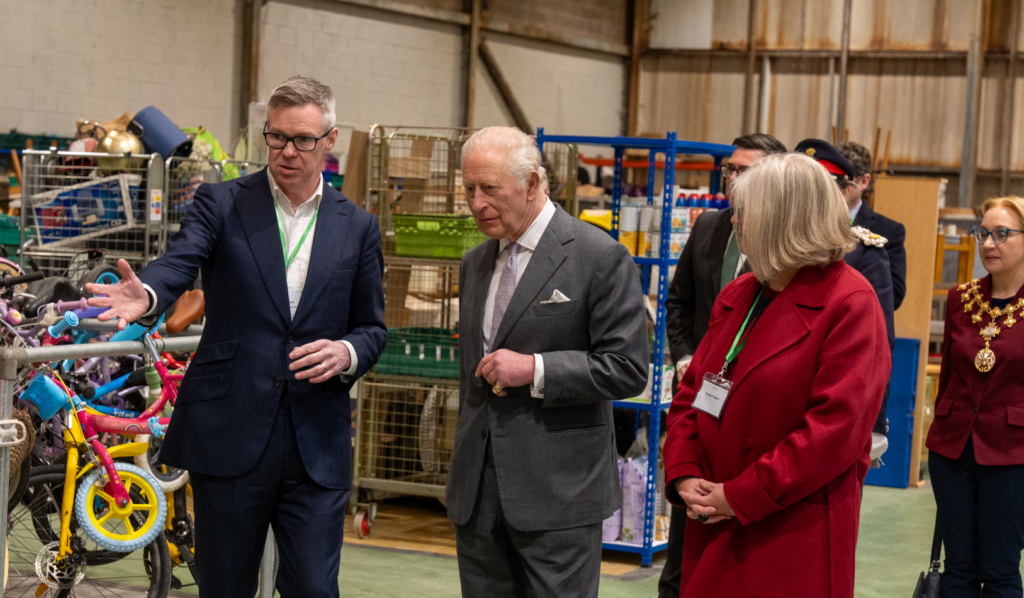
Inspired by His Majesty King Charles III – who attended the official launch – the programme aims to encourage organisations to rethink how materials are designed, used and managed, with a strong emphasis on reuse, high-quality recycling, remanufacturing and repurposing.
Targeting key sectors including construction, manufacturing and waste management, the initiative invites businesses to commit to four core principles: plan, act, partner and share progress.
Founding signatories include major organisations such as construction company Sir Robert McAlpine, real estate company JLL, Suez Recycling and Recovery UK, EMR and Tata Steel UK, reflecting a broad, cross-sector commitment to embedding circular economy practices.
letsrecycle.com spoke to Suez to understand how Circularity in Practice came about and what it aims to achieve.
How was the initiative started?
Circularity in Practice is a voluntary collaboration between organisations.
The Taskforce is made up of an initial group of companies and organisations that are willing to demonstrate practical action, share learning, and help to build momentum and confidence across the sector.
These founding members represent a diverse mix of expertise, spanning design, construction, materials, and resource management, as well as reuse and repair companies.
Why is it important that it involves organisations across the value chain?
Circularity needs to be embedded into every stage of a product or material’s lifecycle.
Without collaboration across the entire value chain – from design and manufacturing through to use, recovery and reuse – it will not be possible to achieve the level of systemic change required.
In what ways was the initiative inspired by the King?
The initiative was inspired by His Majesty The King’s life-long interest in environmental stewardship.
Which materials will the initiative be targeting first?
The initiative takes a broad approach, with materials in scope including building materials, lighting, furniture, fixtures and fittings, as well as household goods and appliances.
Many of these items are frequently discarded despite still being suitable for reuse, refurbishment, remanufacturing or recycling.
How many signatories are there so far?
There are 86 official signatories so far, with around 150 businesses represented at the launch event itself.
Signatories include Sir Robert McAlpine, JLL, Orms, McGee, Great Portland Estates, Tata Steel UK, EMR, Rype Office, Suez, Therme, Pineapple Partnerships, SAS International, Saint-Gobain, Recolight, 18 Degrees, Alandale Group, Don’t Waste Buildings, Excess Materials Exchange, the British Chambers of Commerce – and many regional SMEs.
