

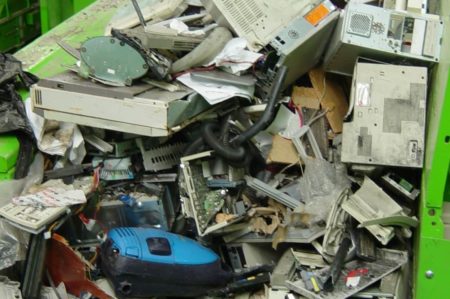
The data, which has been published online by the Environment Agency this morning shows that a total of 254,260 tonnes of all categories of WEEE were collected for recycling between January and June 2015.

BIS has set a target to collect a total of 506,878 tonnes of WEEE in 2015 which means that a quarterly collection rate of 126,719 tonnes would be required – roughly in line with what has been achieved during the first two quarters of the year.
Shortfalls
The figures also suggest that there may be no collection shortfalls in any of the categories of WEEE come the end of the year. This is important as compliance schemes are liable to pay a ‘compliance fee’ should they fall short of their collection targets. But, some schemes may still be liable to pay the fee if they are unable to source enough WEEE evidence to meet the requirements of their members by the end of the year.
In 2014, the first year of the newly adopted WEEE system, schemes failed to raise enough evidence in the large domestic appliances (LDA) category – falling short of the end of year target by around 9,000 tonnes (see letsrecycle.com story).
BIS has set a slightly lower target for LDA in 2015 – and compliance schemes overall are close to achieving the required collection rate to meet the target with 86,794 tonnes of the material collected during the first six months of the year, over a required collection rate of around 87,364 tonnes.
Commenting on the data a BIS spokesperson said: “Figures released today by the Environment Agency suggest that we are on track to meet our collection targets across all WEEE categories in 2015.”

Speaking to letsrecycle.com, Adrian Hawkes, policy director at Valpak, confirmed that the figures appeared to show that the sector is on track to meet the 2015, and said that the performance is likely to raise the possibility of a higher target for subsequent years.
He said: “I think we are on track to meet the 2015 targets in all streams with the possible exception of small domestic appliances where it might be tight. In cooling and display equipment in particular it is comfortable.
“The increase in tonnage of LDA could possibly be linked to some recovery in housebuilding, with more people buying new appliances – although without looking at purchasing data in detail it is difficult to say.
“If we are correct and they are comfortably going to exceed the targets then there might be scope for raising targets for future years without great extra cost.”
Lamps
Also commenting on the figures, Nigel Harvey, chief executive of lamp compliance scheme Recolight noted that while the overall picture is positive, there is some concern over the volume of lamps being placed onto the market for the year.
According to Mr Harvey, a change in guidance over the classification of ‘dual use’ EEE, intended to amend the way that consumer (B2C) and business to business (B2B) goods are recorded have not been applied by lamp producers.
Mr Harvey said: “The latest WEEE data is positive. It continues to show that the new UK system is performing well, and that collections are on course to meet the 2015 target.
“However, the household lamp EEE data (category 13) is a cause for concern. A total of 16,300 tonnes of lamp EEE were reported in 2014. Under the new dual use definition, most of that should probably be reported as household in 2015. But so far, only 4,500 tonnes of household lamps have been reported. It would appear that some lighting producers are not yet applying the new dual use definitions.”

Register for free to comment